Why Basement Water Damage Is Cedar Rapids' Most Common Water Emergency
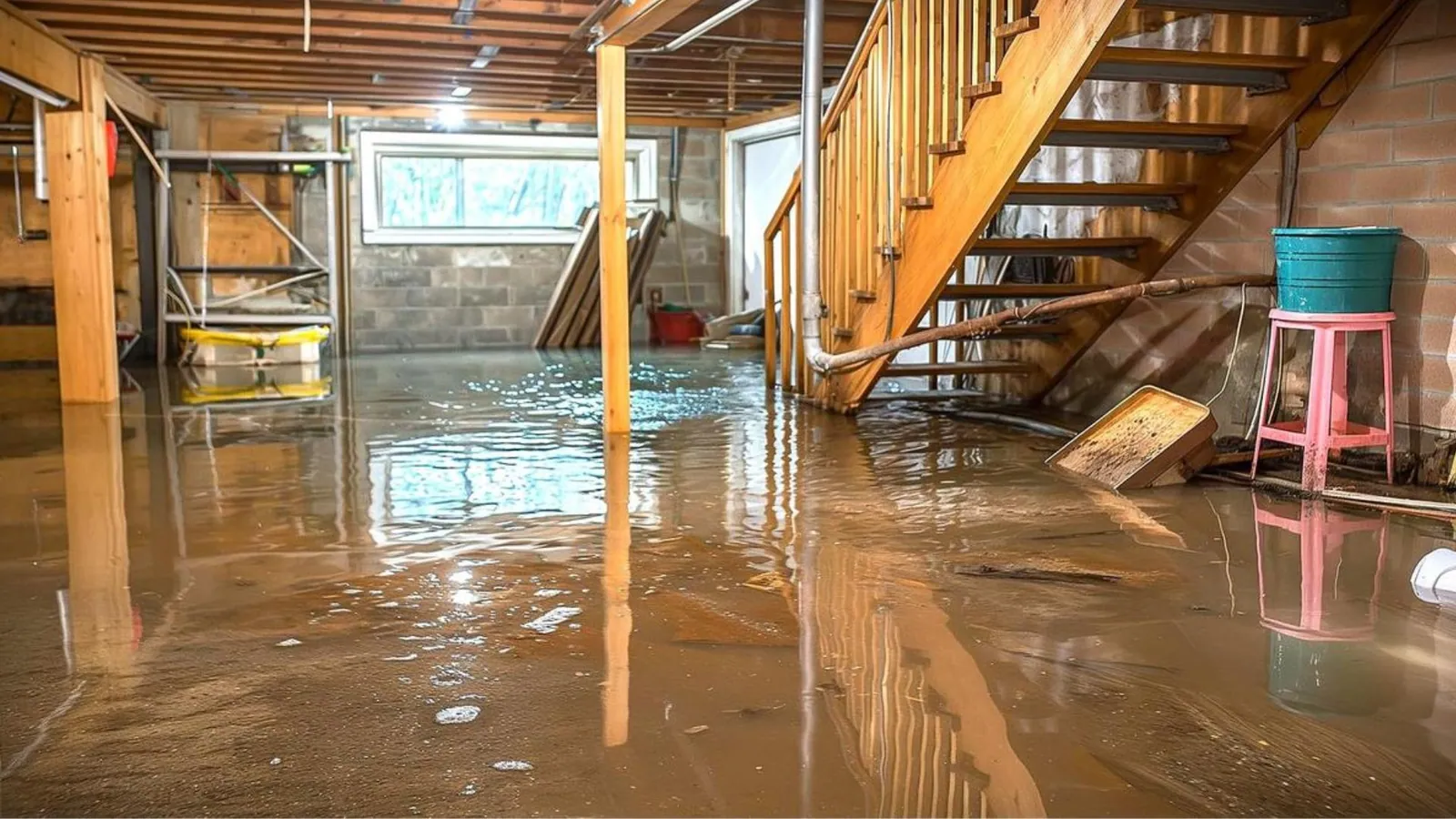
Basement water damage accounts for more than 60% of the water damage calls we run in Cedar Rapids. It's the dominant water emergency in this market — more common than appliance failures, roof leaks, and supply line bursts combined. The reasons trace directly to Cedar Rapids' soil composition, weather patterns, and aging housing stock.
Large parts of Cedar Rapids and Marion sit on clay-heavy soils with high water tables. Spring thaw — when frozen ground suddenly releases the winter's snow load while underground soils are still saturated — pushes groundwater up against foundations from below. Homes with marginal drainage or aging sump systems take on basement water every March without fail.
On the housing side, Cedar Rapids has a large stock of pre-1970 homes — particularly in Czech Village, Time Check, Bever Park, and Mound View — built with cast-iron drain stacks, original clay-tile lateral lines, and unsealed concrete foundations. Each of these is a potential failure point. And on top of that, every finished basement built in the last 30 years (Hiawatha, Marion subdivisions, Northwest Cedar Rapids) is one sump pump failure away from a major restoration job.
The Five Causes of Basement Water Damage We See Every Week
1. Sump Pump Failure
By call volume, this is cause #1. Sump pumps fail in three modes: the pump motor fails (most often when the homeowner needs it most — during heavy rain), the float switch sticks (pump doesn't start despite rising water), or the discharge line freezes/clogs. Every sump pump should have a battery backup unit; many in Cedar Rapids don't. The first warning sign of sump failure is often the smell of a damp basement — by the time water is visibly rising, you have minutes, not hours.
2. Foundation Seepage
Cedar Rapids soils are clay-heavy, particularly on the east side of the river. Clay holds water against foundation walls during heavy rain, and any crack, deteriorated mortar joint, or failed damp-proofing eventually leaks. Older homes in Bever Park, Mound View, and Czech Village see this most. Foundation seepage is usually a gradual problem (slow drip during heavy rain) until the crack widens or the soil becomes saturated to a critical level — then the slow drip becomes a steady stream.
3. Sewer Backup
Cedar Rapids' aging sanitary sewer system has documented capacity issues during heavy rain, and combined sewer overflows push wastewater back through floor drains and toilets into finished basements. Without the sewer backup endorsement on your homeowners policy, this loss is usually out-of-pocket.
4. Burst or Leaking Pipes
Frozen pipe failures dominate winter months — particularly in homes with PEX or copper supply lines running through unheated crawl spaces, exterior walls, or garage ceilings. A failed ½-inch supply line can dump 100+ gallons of water per hour into a finished basement. Water heater ruptures account for another chunk of basement water damage calls; old water heaters in basement utility rooms eventually fail, and the failure mode is sometimes a sudden tank rupture rather than a slow leak.
5. Spring Thaw and Heavy Rain Events
Even homes with working sump pumps and intact foundations take on water when groundwater hits a critical threshold. Cedar Rapids gets 2+ inches of rain in a few hours regularly during spring rain season, and the soil simply can't absorb it. Water finds its way through hairline foundation cracks, around basement windows, and up through concrete floor pours that don't have proper vapor barriers underneath.
Our Basement Water Damage Restoration Process
1. Emergency Dispatch (Fast Emergency Response)
Our dispatch team answers your call and a truck is dispatched as quickly as possible for a fast emergency response across Cedar Rapids and Marion addresses. Initial work is loss containment — stopping any active source if possible, then assessment.
2. Source Identification
Before extraction starts, we identify what caused the water damage. This determines water category (Category 1, 2, or 3 per IICRC S500), insurance billing track, and prevention recommendations. Active sump pumps that failed are tested; foundation cracks are documented; sewer backups are noted; pipe bursts are isolated by shutting off the affected supply line.
3. Bulk Water Extraction
Submersible pumps for deep water (we've pumped basements with 24+ inches of standing water in single events). Truck-mounted extractors for finish-out water and carpet. See our water extraction service for equipment details. Most Cedar Rapids basements with standing water are pumped to a damp surface within 2-4 hours of arrival.
4. Content Pack-Out
Furniture, electronics, books, photos, and stored items are moved out of the affected area. Salvageable items go to upstairs rooms or to our climate-controlled facility for cleaning and storage during the rebuild. Unsalvageable items are inventoried and photographed for insurance.
5. Controlled Demolition (Scope Depends on Damage)
Wet drywall is cut to 12-24 inches above the high-water mark. Soaked insulation is removed. Carpet pad is removed (carpet sometimes saved if Category 1 and caught early). Baseboards and affected base cabinets are removed. The goal is to get every unsalvageable porous material out before drying begins, so we're drying structure rather than trying to dry destroyed material.
6. Antimicrobial Treatment
EPA-registered antimicrobial applied to remaining framing, subfloor, and concrete. Required for any event longer than 24 hours and for all Category 2/3 events.
7. Structural Drying
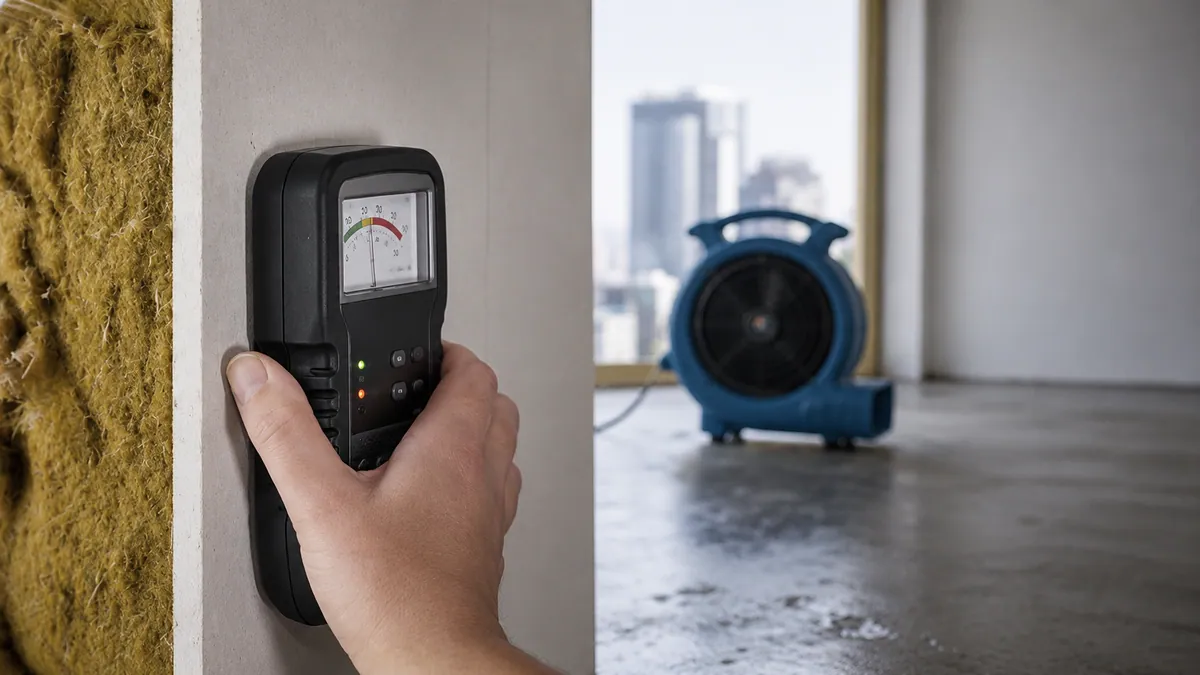
Professional-grade air movers (one per 10-16 linear feet of wall) and LGR dehumidifiers run continuously for 3-7 days. We return daily for moisture readings on framing, subfloor, and remaining drywall. Equipment stays until readings hit IICRC S500 dry standard. See our structural drying page for the technical detail.
8. Mold Inspection
Any water event that sat more than 48 hours requires post-mitigation mold inspection. Visible growth or elevated spore counts require remediation per IICRC S520 before reconstruction.
9. Reconstruction
New drywall, insulation, flooring (often new carpet, sometimes upgraded LVP), trim, paint, and any cabinet or built-in replacements. We coordinate as part of the same project — one contractor, one timeline, one set of insurance paperwork.
10. Prevention Recommendations
Before we leave, we walk you through what caused the water damage and what prevents the next one — battery backup sump pumps, exterior drainage improvements, sewer backup valves, supply line shutoff retrofits. Optional, but most homeowners want to know.
Signs Your Basement Has a Water Problem (Or Is About To)
- Sump pump running constantly during normal weather (overwhelmed pump)
- Sump pump that hasn't cycled in months (possibly stuck float)
- Visible water marks low on basement walls
- Damp or musty smell, particularly after rain
- Efflorescence (white powdery deposits) on basement walls
- Cracks in foundation walls or floor, particularly during heavy rain
- Standing water around basement floor drains
- Water seeping in around basement windows during heavy rain
- Higher-than-normal humidity readings in the basement (60%+ RH)
Cost Factors and Insurance Coverage
Basement water damage restoration in Cedar Rapids typically runs $4,000 – $8,000 for an unfinished basement with limited damage, $8,000 – $20,000 for a finished basement with partial reconstruction, and $25,000+ for finished basements with major damage requiring full rebuild.
Insurance coverage varies dramatically by cause:
- Burst pipe or appliance failure: covered under standard Iowa homeowners policies
- Sewer backup: covered only with sewer backup endorsement (recommended)
- Sump pump failure: coverage depends on your policy — some require a separate rider
- Foundation seepage from rain: usually not covered (considered gradual)
We help you understand which policy applies on the first call.
Service Areas for Basement Water Damage Restoration
We restore basement water damage across Cedar Rapids and Linn County, with particularly heavy call volume in Marion (sump-dependent subdivisions), Hiawatha (newer subdivisions with sump pump dependence), Southeast Cedar Rapids (older homes with foundation seepage), and Northwest Cedar Rapids (frozen pipe failures in winter). We also serve Downtown Cedar Rapids, Robins, Ely, and Fairfax.
Related reading on why basements take on water and what to do about it: why a basement gets wet after heavy rain, waterproofing vs. restoration, and who to call, and in what order.