What Is Water Extraction and Why It Has to Happen Fast
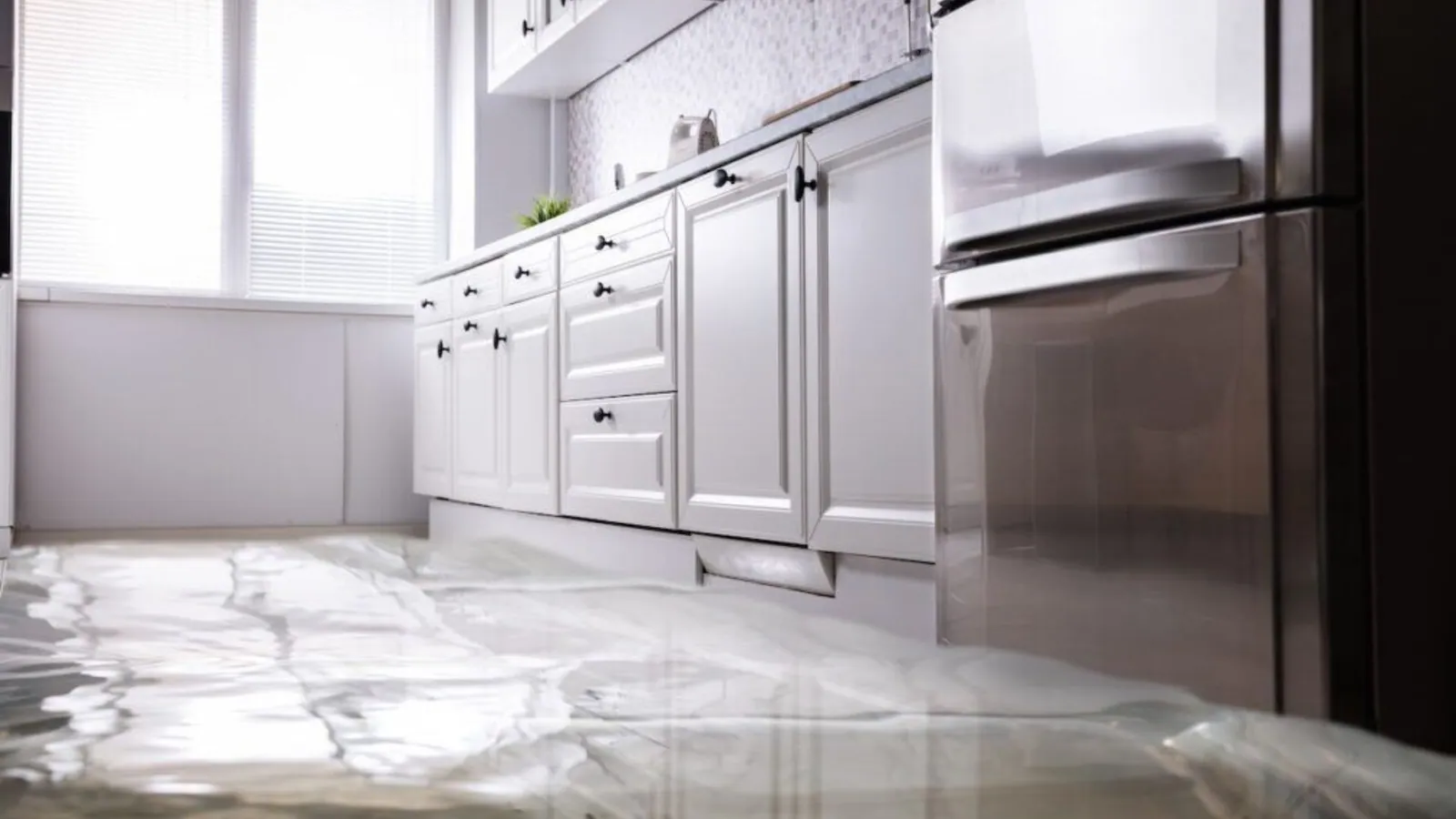
Water extraction is the physical removal of standing water from a residential property — basements, crawl spaces, living areas, finished floors — using truck-mounted vacuum extractors and submersible pumps. It's the first phase of any water damage restoration job, and it has to happen fast because every hour standing water sits, the damage multiplies.
Inside the first hour, water seeps into baseboards, drywall, and subflooring. After 12 hours, drywall paper saturates and begins delaminating. By 24 hours, hardwood floors cup and warp. After 48 hours, mold begins forming on cellulose surfaces — and once mold starts, you've added an entirely separate remediation job to what was a simple water removal call.
That 48-hour mold window matters even more in Cedar Rapids because of Iowa humidity. From May through September, ambient humidity inside a Linn County home can sit above 60% RH naturally, which means a wet structure dries slower and feeds mold faster than the same job would in a drier climate.
Why Cedar Rapids Has More Extraction Calls Than Most Cities
Cedar Rapids' housing stock and climate practically guarantee water emergencies. Iowa's freeze-thaw winters are hard on plumbing — supply lines running through unheated crawl spaces, attics, and exterior walls freeze, expand, and split, releasing 100+ gallons an hour until the main is shut off. Spring thaw then pushes groundwater up against foundations, producing enough basement seepage that we run multiple extraction calls every March and April.
Beyond seasonal failures, the city has a large stock of pre-1970 homes — Czech Village, Time Check, Bever Park, Mound View — with original galvanized supply lines and cast-iron drain stacks reaching end of life. Slow pinhole leaks and sudden line failures behind walls are constant. Add aging water heaters, failed sump pumps, and burst washer and dishwasher supply hoses across the metro, and the result is a steady volume of internal water emergencies in every neighborhood.
We've extracted water from Bever Park bungalows, Mound View ranches, NewBo District lofts, Tower Terrace townhomes in Marion, and rural Robins acreages with private wells. Different neighborhoods, same problem: standing water that has to come out before the framing rots.
Our Water Extraction Process — Step by Step
1. Initial Assessment (First 15 Minutes On-Site)
Before any pumps fire up, our lead technician walks the affected area with a moisture meter and thermal imaging camera. We map the boundary of saturated material, identify the water source if it's still active, and document the loss with timestamped photographs your insurance adjuster will require.
2. Source Control
If water is still flowing — burst supply line, failed sump pump, leaking water heater — we stop it. That might mean shutting off the main water valve, isolating a failed fixture, or temporarily tarping a roof leak. Extraction without source control is just pumping water in a circle.
3. Content Removal and Pack-Out
Salvageable furniture, electronics, books, and personal items are removed from the affected area. Items in immediate contact with contaminated water are documented for insurance and either cleaned on-site or removed. Sentimental items (photos, documents) get priority for specialty drying.
4. Bulk Water Extraction
For deep standing water, we deploy submersible pumps with capacities up to 5,000 GPH. For shallow flooding and water in carpet or upholstery, our truck-mounted extractors pull water through weighted wands at 200+ gallons per minute. A typical Cedar Rapids basement with standing water is pumped to a damp surface in 2-3 hours.
5. Surface Water Recovery
After bulk extraction, weighted extraction tools recover residual water from carpet, padding, hardwood, and tile. Crawl spaces and confined areas get specialty narrow-wand attachments. We measure moisture content as we go to confirm we've hit the IICRC S500 baseline before transitioning to drying.
6. Controlled Demolition (When Necessary)
If water has been sitting more than 24 hours, or if the source was contaminated, we cut wet drywall to 12 inches above the visible water line, remove soaked insulation, and pull baseboard and flooring as needed. This isn't damage we're creating — it's removing material that's already destroyed and would otherwise host mold or rot the framing behind it.
7. Transition to Drying
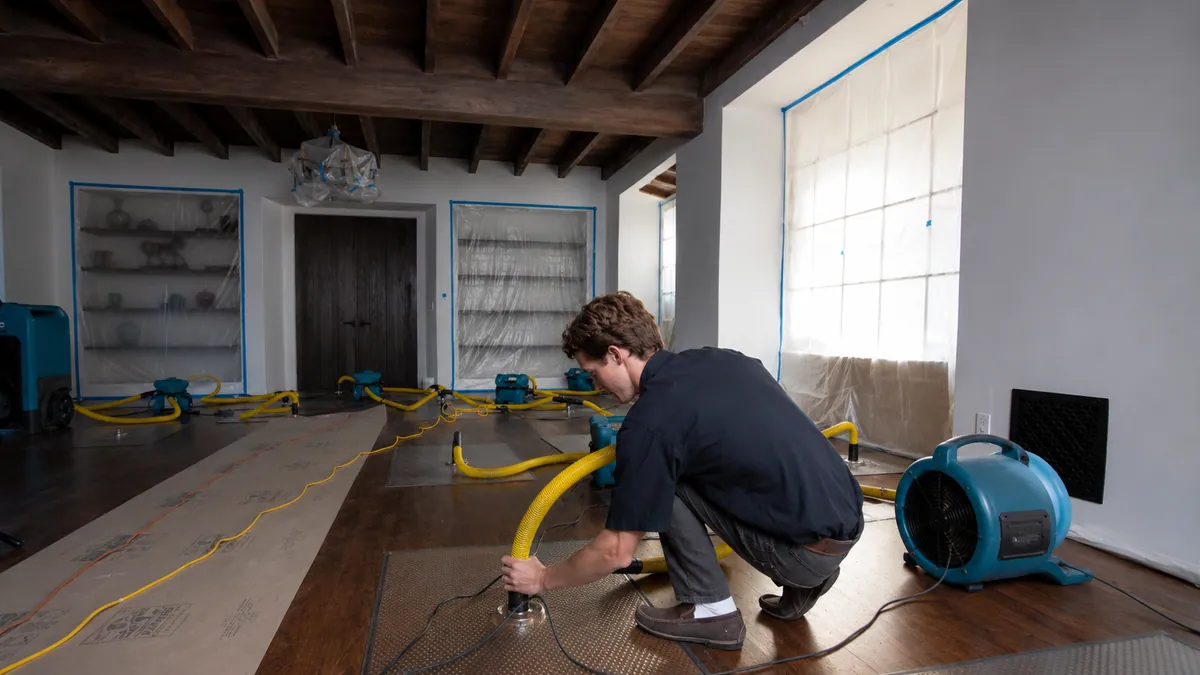
Once standing water is out, we stage professional-grade air movers and LGR dehumidifiers. Extraction is over; structural drying begins. Our crews leave equipment running 24/7 and return daily to take moisture readings until your home hits dry standard.
Equipment We Bring on Every Extraction Call
- Truck-mounted extractors — heated water, vacuum recovery, and 200+ GPM throughput. Weighted wands for carpet and pad.
- Submersible trash pumps — for deep flooded basements and crawl spaces. Up to 5,000 GPH on a single unit.
- Moisture meters — both pin and pinless, for framing, drywall, and finish surfaces.
- Thermal imaging cameras — to find water hidden in walls, ceilings, and behind cabinets that visual inspection misses.
- Hardwood extraction mats — Drymatic or similar, for saving hardwood floors before they cup permanently.
- HEPA-filtered air scrubbers — when contaminated water or mold is involved.
Signs You Need Emergency Water Extraction Now
- Standing water of any depth on finished floors
- Water actively flowing from a burst pipe, appliance, or roof
- Sump pump that has failed or is overwhelmed during heavy rain
- Water rising up through floor drains during heavy rain
- Visible water marks rising up drywall or baseboards
- Squishy carpet, pooling around baseboards, or water-stained subfloor
- Strong musty smell that wasn't there yesterday
- Buckled, cupped, or warped hardwood floors
If you're seeing any of these, call us as soon as possible. Our 24/7* line connects you to our dispatch team, who will help route your emergency.
Cost Factors and Insurance Coverage
Water extraction pricing in Cedar Rapids depends on three main factors: volume of water, contamination category, and how long it has been sitting. A standard clean-water extraction (Category 1 — broken supply line, dishwasher overflow) typically runs $1,500 – $3,500 for a single-room job. Major basement water damage from a sump pump failure runs $5,000 – $15,000 with full mitigation. Losses involving grossly contaminated water (Category 3) start around $7,000 because of the additional PPE, disinfection, and disposal protocols.
The good news: standard homeowners insurance policies in Iowa cover the majority of water damage extraction when the source is sudden and accidental. We bill carriers like State Farm, Allstate, Farm Bureau, American Family, and Liberty Mutual directly. Most homeowners pay their deductible and nothing else. We document the loss with the photographs, moisture readings, and equipment logs adjusters expect, which speeds up claim approval and minimizes push-back.
Why Choose Us for Water Extraction in Cedar Rapids
- Fast emergency response across Cedar Rapids, Marion, and Hiawatha, with coverage for Robins, Ely, Fairfax, and rural Linn County.
- IICRC S500-protocol training on every job — the reference standard adjusters expect on water mitigation documentation.
- Truck-mounted equipmentin every vehicle. We don't have to come back with the right tool — it's already in the truck.
- Direct insurance billing with all major Iowa carriers. You sign one work authorization; we handle the rest.
- Local crews — not a national franchise routing your call through Texas. Same trucks, same faces, every job.
Service Areas for Water Extraction
We provide emergency water extraction throughout Cedar Rapids and Linn County, including Downtown Cedar Rapids, Northwest Cedar Rapids, Southeast Cedar Rapids, Marion, Hiawatha, Robins, Ely, and Fairfax. If your address is in Linn County, we cover it.
Need extraction combined with water damage cleanup, structural drying, or mold remediation? It's all one job, one crew, one phone call.
If this is happening right now: who to call, and in what order, and what proper drying involves once the water is out.