What Mold Remediation Actually Means
Mold remediation is the IICRC S520-governed process of returning an indoor environment to normal mold levels after contamination. It is not the same as “mold removal,” which describes the physical act of cleaning visible growth. Remediation is the complete protocol: assessment, containment, controlled removal of affected materials, HEPA-filtered air scrubbing, antimicrobial treatment, clearance verification, and documentation.
The reason this matters is that incomplete mold work fails. Spraying bleach on a basement wall hides the visible problem for a few weeks, but the spores embedded in drywall, framing, and porous materials regrow as soon as the surface re-humidifies. Real remediation addresses the source of the moisture, removes the contaminated substrate, captures airborne spores, and verifies clearance with independent testing — so the problem is actually solved.
Why Cedar Rapids Homes Are Especially Mold-Prone
Iowa's climate creates ideal conditions for mold. Summer humidity regularly exceeds 70% relative humidity, and many Cedar Rapids homes — particularly older Czech Village and Time Check housing stock — weren't designed with the vapor barriers and exhaust ventilation that modern construction includes. Once moisture gets in, it stays.
We see three major mold drivers in Cedar Rapids: water damage from burst pipes, water heater failures, and appliance leaks that wasn't dried within 48 hours; chronic basement humidity in homes with unsealed concrete floors and inadequate dehumidification; and slow leaks behind walls — usually from original supply lines in pre-1970 homes — that go undetected for months until the smell or visible growth appears.
Specific neighborhoods we see disproportionate mold work in: Czech Village (older stone-foundation basements), Bever Park (mature trees and clay soils causing chronic foundation moisture), Mound View (1950s-60s ranches with tuck-under garages and slab moisture issues), and Marion subdivisions with sump-dependent basements.
Our Mold Remediation Process — IICRC S520 Protocol
1. Initial Assessment and Source Identification
Before any remediation begins, we identify the moisture source. Mold remediation without source correction is a guarantee of recurrence. We use thermal imaging to find hidden water in walls and ceilings, moisture meters to map saturation patterns, and sometimes invasive testing (small inspection holes) to confirm what's behind finished surfaces.
2. Air Quality Testing (Optional but Recommended)
For larger projects, we coordinate with independent environmental hygienists to take pre-remediation air samples. This establishes baseline spore counts and species, which is the metric we'll clear against at the end of the job. For smaller, contained projects with obvious visible growth, testing isn't always required.
3. Containment Setup
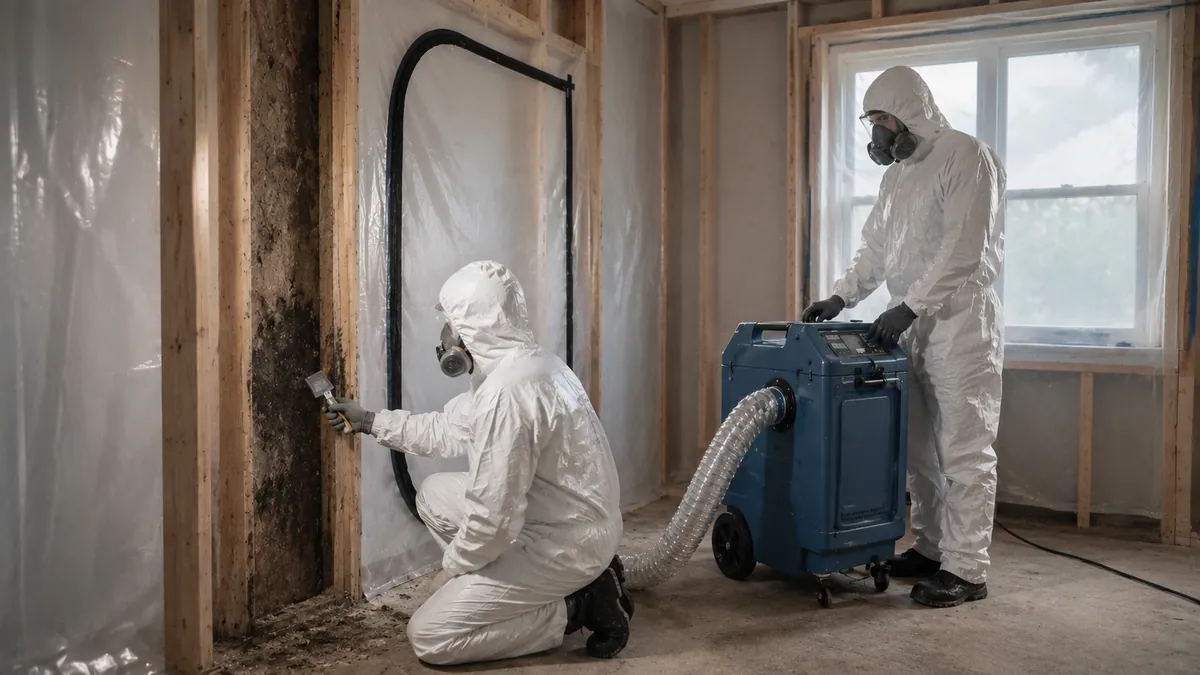
The affected area is sealed with 6-mil polyethylene sheeting and zipper doors. HVAC supply and return registers are sealed off to prevent spore migration through ductwork. For larger jobs, we run negative air pressure inside containment using HEPA-filtered air scrubbers vented outside, ensuring spores released during removal stay inside the work area.
4. Personal Protective Equipment
Crew works in P100 respirators, full-body Tyvek suits, gloves, and boot covers. This isn't theater — disturbing established mold colonies aerosolizes millions of spores per cubic foot, and worker exposure is a real OSHA-governed concern.
5. Controlled Removal
Affected drywall, insulation, baseboards, carpet, and contaminated porous materials are physically removed under containment, double- bagged, and disposed of as construction debris (or as regulated waste for severe contamination). Framing and other semi-porous structural elements are typically cleaned in place rather than removed — wood is sanded to clean surfaces and then treated.
6. HEPA Vacuuming and Damp Wiping
All surfaces inside containment — walls, framing, subfloor, remaining materials — are HEPA-vacuumed and damp-wiped with EPA-registered antimicrobial cleaning agents. Multiple passes. We don't move on until visible debris is gone and surfaces are clean to the touch.
7. Antimicrobial Treatment
Final pass of EPA-registered fungicide applied per label to framing, subfloor, and any remaining porous surfaces. This step kills residual mycelium and acts as a short-term inhibitor while the structure dries fully.
8. Drying
Professional-grade dehumidifiers and air movers run inside containment until moisture content in framing returns to dry standard (typically below 15% MC for wood). See our structural drying page for equipment details. Mold cannot regrow on properly dried materials, so this step is non-negotiable.
9. Post-Remediation Verification (PRV)
For larger projects, an independent hygienist returns to take post-remediation air samples and compare to the pre-remediation baseline. Visual inspection confirms no remaining growth or moisture indicators. Only then is containment removed.
10. Reconstruction
Drywall, insulation, paint, flooring, and trim restored to pre-loss condition. We coordinate with the rest of the rebuild if mold remediation is part of a larger water damage project.
Signs You Have Mold and Need a Specialist
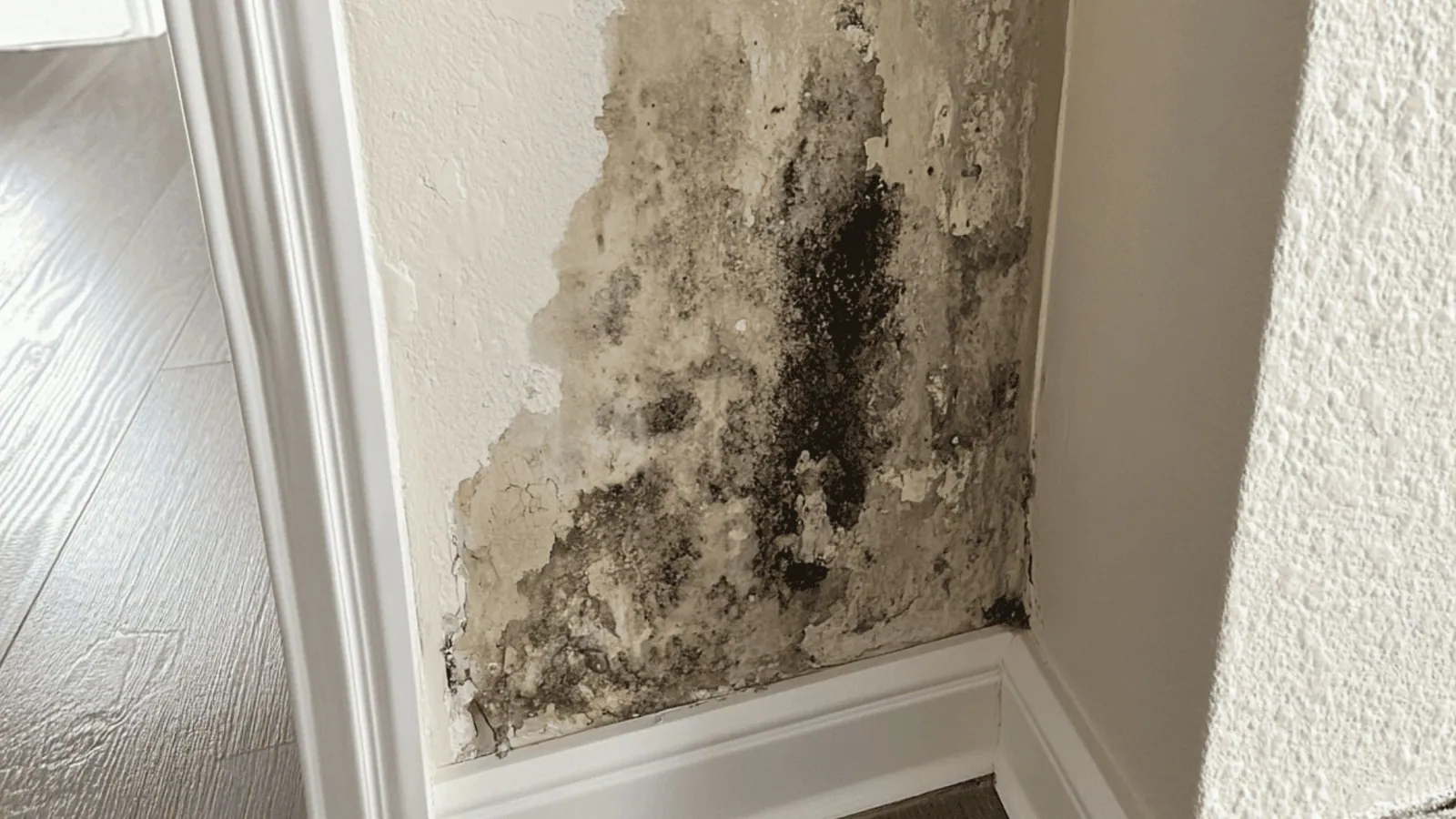
- Visible black, white, green, pink, or fuzzy growth on walls, ceilings, or framing
- Persistent musty or earthy smell, especially in basements or near plumbing
- Recurring respiratory symptoms (coughing, congestion, asthma flares) that improve when away from home
- Past water damage that wasn't professionally dried within 48 hours
- Chronic basement humidity above 60% RH
- Discoloration on drywall or ceiling tiles
- Dark spots around plumbing chases, under sinks, or behind appliances
- Allergic reactions in family members that worsen at home
Cost Factors and Insurance Coverage
Mold remediation in Cedar Rapids typically runs $1,500 – $4,500 for a small contained project (single bathroom, partial basement wall), $5,000 – $15,000 for a typical basement or whole-room remediation, and $20,000+ for whole-home or HVAC system contamination. Reconstruction is additional.
Iowa homeowners insurance coverage for mold is mixed. Mold caused by a sudden, covered water loss (burst pipe, appliance overflow) is generally covered. Mold from long-term humidity, deferred maintenance, or undetected slow leaks is often denied. Many policies have mold-specific sub-limits — $5,000 to $10,000 is common — so even when coverage applies, larger jobs often involve out-of-pocket cost. We help you read your declarations page and understand limits before work begins.
Why the IICRC S520 Reference Standard Matters
Iowa doesn't license mold remediation contractors at the state level — there's no state board you can complain to about a bad job. The industry's reference standard is IICRC S520 (published by the Institute of Inspection, Cleaning and Restoration Certification), which defines the protocols for microbial remediation: containment, HEPA filtration, controlled removal of contaminated porous materials, and post-remediation verification.
We work to that reference standard on every job. Insurance adjusters recognize the S520 protocol set, and any third-party hygienist verifying remediation work compares results against the same standard. Ask any restoration company about their S520 protocols before they start work — it's the right question regardless of who you hire.
Service Areas for Mold Remediation
We provide mold remediation throughout Cedar Rapids and Linn County, including Downtown Cedar Rapids, Southeast Cedar Rapids (heavy Czech Village and older home work), Marion, Hiawatha, Northwest Cedar Rapids, Robins, Ely, and Fairfax.
Mold remediation is often combined with water extraction, basement water damage restoration, and structural drying as parts of a single project — typical when we're called in days or weeks after the original water event.
If you are still working out what you are dealing with, these go deeper: what mold remediation costs and what moves the price, attic mold, which is usually a ventilation problem, and how fast mold follows a water loss.