
Ceiling Water Damage After a Plumbing Leak: What Cedar Rapids Homeowners Should Check
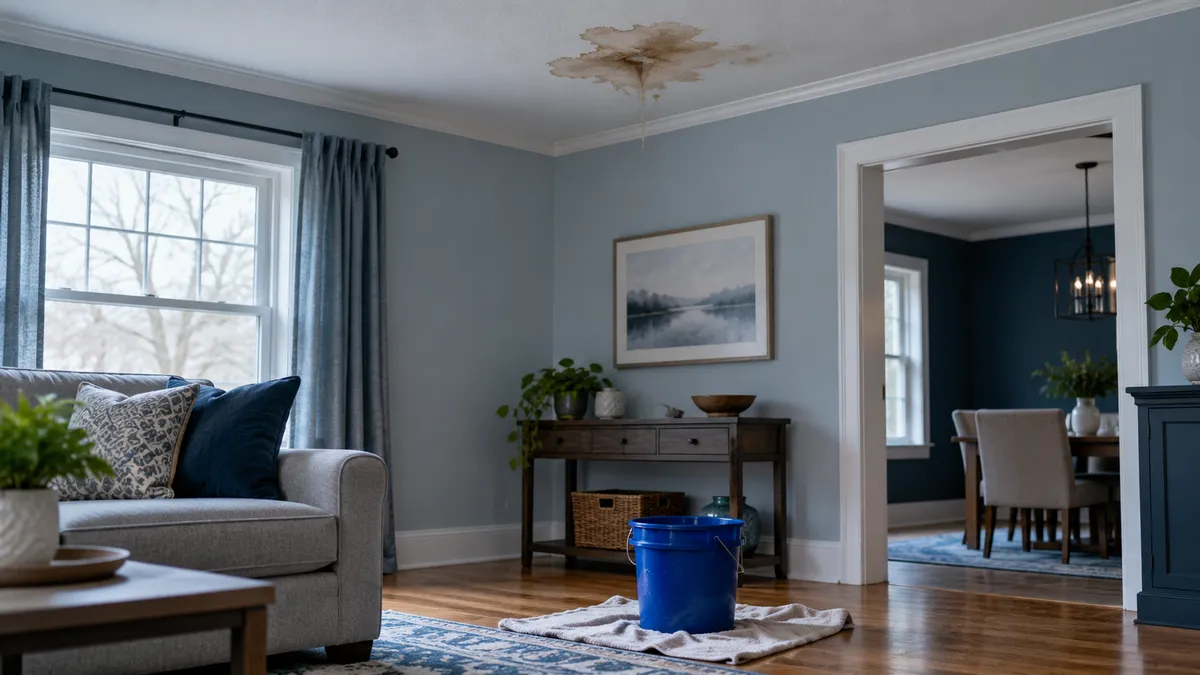
A brown ceiling patch below an upstairs bathroom is easy to treat as a painting job. That is a poor starting point. Paint tells you very little about the insulation, framing, or backside of the drywall above it. Before decorating, establish where the water came from and whether the assembly is dry.
This guide covers interior plumbing and appliance leaks in Cedar Rapids homes. The useful distinction is between the person who stops the source and the person who assesses the resulting water damage. Those may be different trades.
Start with the room above the stain
Write down what was happening when the mark appeared: a shower was running, a toilet had overflowed, a washer was filling, or nobody was using water. That history helps a plumber narrow the investigation. A stain that changes after fixture use points to a different pattern from one that stays damp between uses.
Do not assume the fixture directly above the mark is responsible. Water can follow a joist, pipe, or seam before appearing below. Give the plumber the wider history rather than a confident diagnosis based only on the stain location.
- Photograph the whole ceiling and a closer view of the affected area.
- Record which upstairs fixtures or appliances were in use.
- Note any bubbling paint, visible sagging, or damp trim.
- Keep the plumber's findings and photographs of the failed component.
Know when the room should stay out of use
A visibly sagging ceiling, falling material, or water around a light fitting changes the priority. Keep people and pets away from the affected area. Do not stand beneath it, puncture the bulge, or operate a wet fitting. An electrician can assess affected electrical equipment; a qualified professional can assess the ceiling assembly.
Only close a known water supply valve if you can reach it safely. If you are unsure where it is, the existing Cedar Rapids shutoff guide explains the planning questions to resolve with a plumber. It is not a reason to enter an unsafe room.
A stopped leak does not answer the drying question
Ask for the damage assessment to include the cavity above the visible patch, adjacent wall connections, insulation, and the floor assembly above. A photograph of dry-looking paint is not a moisture assessment.
A useful report identifies the materials checked, where measurements were taken, the comparison areas used, and any places that could not be accessed. If the contractor recommends opening the ceiling, ask what they expect to find and what the opening will allow them to evaluate. Do not agree to a large demolition area merely because the outline of the stain looks large.
Should the ceiling drywall stay or come out?
There is no reliable answer from a photo alone. The EPA's material guidance says drywall may be dried in place when there is no obvious swelling and the seams remain intact. Damage, contamination, mold, and access to the cavity can change the decision.
Ask the assessor to explain the condition of the board, not just the color of its surface. Is it firm or deteriorating? Are the joints intact? Is insulation behind it retaining moisture? Can the assembly be measured and dried with the proposed setup? Those questions make a keep-or-remove recommendation reviewable.
What to ask before repainting
- Has the leak source been identified and addressed?
- Which materials were wet, and which were checked?
- What measurements support the drying decision?
- Are any cavities still inaccessible or unresolved?
- Is further electrical or building assessment needed?
Stain-blocking primer can hide discoloration. It cannot resolve an active leak or moisture trapped above the ceiling. Keep the source work, drying assessment, and finish work in that order.
The call to make in Cedar Rapids
For a continuing plumbing leak, start with a plumber. For wet ceiling materials after the source has been addressed, ask about residential water damage cleanup and structural drying. Tell the provider which room is affected, whether the ceiling is sagging, and whether electrical fittings are involved.
Cedar Rapids Water Damage Pro connects homeowners with participating service providers. Call to discuss an assessment; provider participation and technician availability vary. Bring the leak history and photographs so the conversation starts with the actual damage rather than a guess.
Questions homeowners ask
Can I paint over a ceiling stain once the pipe is fixed?
First establish that the affected ceiling materials and cavity are dry. Painting can conceal a stain while leaving a moisture problem unresolved.
Does every ceiling stain require drywall removal?
No. Material condition, contamination, access, and moisture findings determine whether drying in place is practical. Ask for the reason behind the recommendation.
Who should I call about water near a ceiling light?
Keep clear of the affected area and have a qualified electrician assess the electrical equipment. A water damage provider can assess affected building materials when access is safe.