
Wood Floor Cupping After a Leak in Cedar Rapids: What to Check Before Sanding
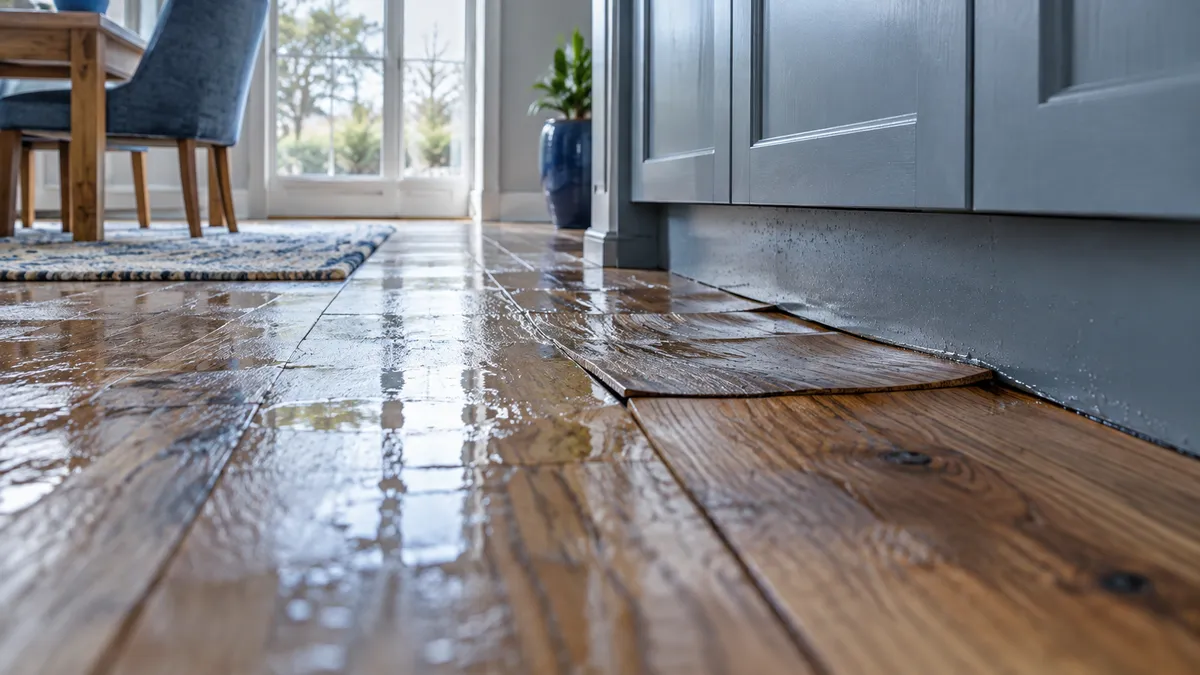
Your kitchen leak has stopped, but the edges of the wood boards now stand higher than their centers. The tempting response is to call someone to sand the ridges flat. Before doing that, determine whether the floor and the assembly beneath it still hold moisture.
For a Cedar Rapids homeowner, the key question is not whether the floor looks bad today. It is whether the water source, affected layers, and material condition have been assessed well enough to choose the next step.
Map the change instead of guessing the damage boundary
Photograph the floor from the same low angle each time so changes are easier to compare. Note which boards changed, where the leak began, and where water traveled. Include the cabinet toe kicks, doorway transitions, and adjoining room in the record.
Do not use the last visibly raised board as the limit of the investigation. Water from a refrigerator line or dishwasher can reach places that are covered by appliances, cabinetry, or another floor finish. The existing appliance leak guide explains these source patterns.
Identify what the floor actually is
Solid hardwood, engineered wood, laminate, and vinyl plank are different materials. They should not receive the same keep-or-remove recommendation just because they all look like wood from standing height.
- Solid hardwood: ask about board condition and the moisture relationship between the flooring and supporting layers.
- Engineered wood: ask whether the layers remain bonded and whether the finish can tolerate the proposed work.
- Laminate: ask whether the core and edges have swollen or deteriorated.
- Vinyl plank: ask about moisture beneath the surface even when the visible plank appears intact.
If you have a spare board, product label, or installation record, show it to the assessor. Product identification is more useful than a generic promise that a floor can be saved.
Ask for an assessment of the whole assembly
A useful moisture map covers affected flooring, comparison areas, the subfloor where accessible, and relevant adjoining materials. Ask the technician to record the instrument and locations used. Readings are most useful when the assessor explains what they mean for that material.
In a home with an accessible basement below the kitchen, the underside can offer another inspection route. Finished ceilings and cabinets may limit access elsewhere. The report should say what was checked and what remains unknown, rather than treating an inaccessible layer as dry.
Why sanding is a later decision
Sanding changes the shape of the surface. It does not establish why the boards changed or whether the underlying problem is resolved. A flooring specialist should evaluate the floor once the moisture investigation and drying work support that next step.
Ask both trades to explain their responsibilities. Who assesses and dries the affected assembly? Who decides whether the flooring is suitable for refinishing? Who documents hidden deterioration if a section is opened? A clear handoff prevents a cosmetic job from becoming a substitute for a damage assessment.
What a drying plan should explain
The EPA's building-material guidance notes that wet material beneath a floor covering needs attention as well as the visible surface. Ask how the proposed plan reaches the affected layers and how progress will be checked.
- Confirm the leak source has been addressed.
- Identify the floor product and installation method where possible.
- Map affected and comparison areas.
- Explain access limits and any proposed removal.
- Set a measurement-based review before finish work.
Be cautious about a single universal moisture number quoted without reference to the material, instrument, and surrounding conditions. Ask for the explanation behind the conclusion.
When to call about the water damage
If boards are changing shape, adjacent cabinets are damp, or water reached the subfloor, discuss a structural drying assessment before arranging sanding. If damp wall edges accompany the floor changes, our drywall assessment guide covers that part of the decision.
Call Cedar Rapids Water Damage Pro to discuss the affected room and connect with a participating provider. Describe the source, flooring type, and access below the floor. An assessment can clarify the scope; material recovery and scheduling depend on the actual condition and provider availability.
Questions homeowners ask
Should I sand a cupped floor after a leak?
Have the moisture condition and supporting layers assessed first. A flooring specialist can then evaluate whether refinishing is appropriate for the product and damage.
Can the subfloor be wet when the surface feels dry?
Yes. Surface appearance does not establish the condition of covered layers. Ask what was checked beneath or alongside the floor.
Will every water-damaged wood floor need replacement?
No single outcome applies to every floor. Product type, deterioration, contamination, and assessment findings determine the next step.