
Ice Dams and the Interior Water Damage They Cause in Cedar Rapids Homes
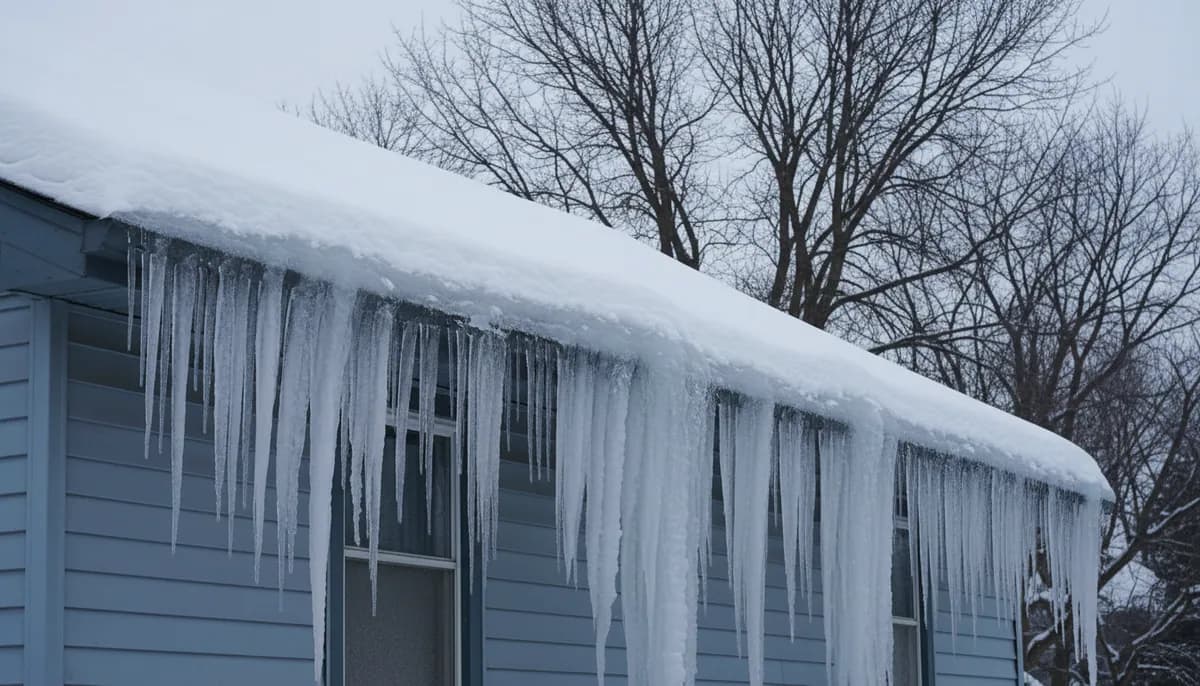
Every Cedar Rapids January produces the same photograph: a row of thick icicles along a roof edge, looking like winter is supposed to look. It is genuinely picturesque and it is also a warning light.
Behind those icicles, meltwater is often pooling on the roof deck and working its way backwards under the shingles. The damage is not on the roof, and it is not outside. It is two feet inland, in your ceiling and your wall cavity, and most of it is not visible until spring.
The Mechanism
Ice dams are a heat problem wearing a weather costume.
- Warm air escapes into the attic through unsealed ceiling penetrations — the hatch, recessed lights, bath fan housings, plumbing stacks, top plates.
- That heat warms the roof deck in the middle and upper portions of the roof, above the heated living space.
- Snow on that warmed section melts, even with outdoor air well below freezing.
- The meltwater runs down to the eave — the overhang beyond the exterior wall, which has no heated space beneath it and sits at outdoor temperature.
- It refreezes there, building a ridge of ice at the roof edge and in the gutter.
- Water backs up behind the ridge. Shingles shed water flowing downhill; they are not designed to hold back a standing pool. Water works under the courses, reaches the deck, and enters the building.
Cedar Rapids gets the combination this needs reliably: sustained sub-freezing spells that put and keep snow on roofs, punctuated by thaw days and sun, on a housing stock where a lot of attics were insulated to a much older standard.
Where The Water Actually Goes
This is the part that surprises people. Water entering at the eave does not simply drip through the ceiling at the edge of the room.
- Down the inside of the exterior wall. It reaches the top plate and runs down the wall cavity, soaking insulation and framing on the way. Nothing shows on the surface for weeks.
- Into the ceiling assembly. Along the drywall above the ceiling, spreading laterally before it finds a seam or a fixture box to come through.
- Into attic insulation. Blown-in insulation absorbs and compresses, losing R-value permanently, which makes the attic warmer and the next ice dam worse.
- Behind window and door trim on the upper floor, where the wall cavity narrows and water finds the framing around the opening.
Because it happens slowly, in cold weather, inside sealed cavities, an ice dam can wet a wall repeatedly through February and produce its first visible stain in April.
Signs Inside The House
- Water stains on the ceiling near exterior walls, particularly in upstairs rooms and corners.
- Paint bubbling or peeling at the top of an exterior wall.
- Damp, matted, or discoloured attic insulation near the eaves.
- Condensation or frost on the inside of upper-floor windows during a cold snap.
- A musty smell upstairs in late winter — this one usually means it has been happening for more than one season.
- Nail heads or drywall seams showing on an upper ceiling as the board absorbs moisture and moves.
What To Do During The Event
Safe: use a roof rake from the ground to clear the lower three or four feet of roof, which removes the snow feeding the dam. Put buckets under active drips inside and, if the ceiling is bulging with trapped water, make a small relief hole at the lowest point to let it drain in a controlled way rather than bringing a section down.
Also safe: hire steam removal. Low-pressure steam melts a channel through the ice without touching the shingles.
Not safe and not advisable: climbing onto an icy roof, chipping with any tool, using a pressure washer, or dumping rock salt on the roof. Each of these turns a seasonal water problem into a permanent roof problem, and the first one is a genuine injury risk.
Fixing The Cause
Everything durable here happens in the attic, in summer, when it is a planned job rather than an emergency.
Air seal the ceiling plane. The highest return item. Sealing the attic hatch, recessed light housings, bath fan penetrations, and top-plate gaps stops the warm air that starts the whole sequence. Often more effective than adding insulation.
Insulate to current depth. Many Cedar Rapids attics are running R-values set decades ago. Bringing depth up keeps heat in the house rather than on the roof deck.
Restore ventilation balance. Clear soffit intake, install baffles so insulation cannot block it, and confirm ridge or upper exhaust. Continuous cold-air washing of the underside of the deck keeps the whole roof at one temperature, which is the actual goal.
Duct bath fans outside. Not into the attic. This one overlaps directly with attic mold, which is the same root cause presenting differently — and houses that get ice dams very often have both.
Ice and water shield at the eaves on the next roof replacement. A membrane under the shingles along the first few feet is the backstop for when a dam forms anyway.
Do Not Wait For Spring To Dry It
The instinct with ice dam damage is to wait until the weather breaks and deal with it then. That is understandable and it is expensive, because the wall cavity does not care what month it is — wet insulation and framing behind sealed drywall in a heated house is a growth environment regardless of the temperature outside.
If you have a stain on an upstairs ceiling or wall this winter, the material behind it needs assessing with a moisture meter now, and drying if it reads wet. That is the same structural drying work as any other interior water loss, and the hidden damage signs guide covers what else to look for. Call and we will check what the cavity is actually holding before it becomes a spring surprise.