
Why Your Cedar Rapids Basement Takes On Water After Heavy Rain
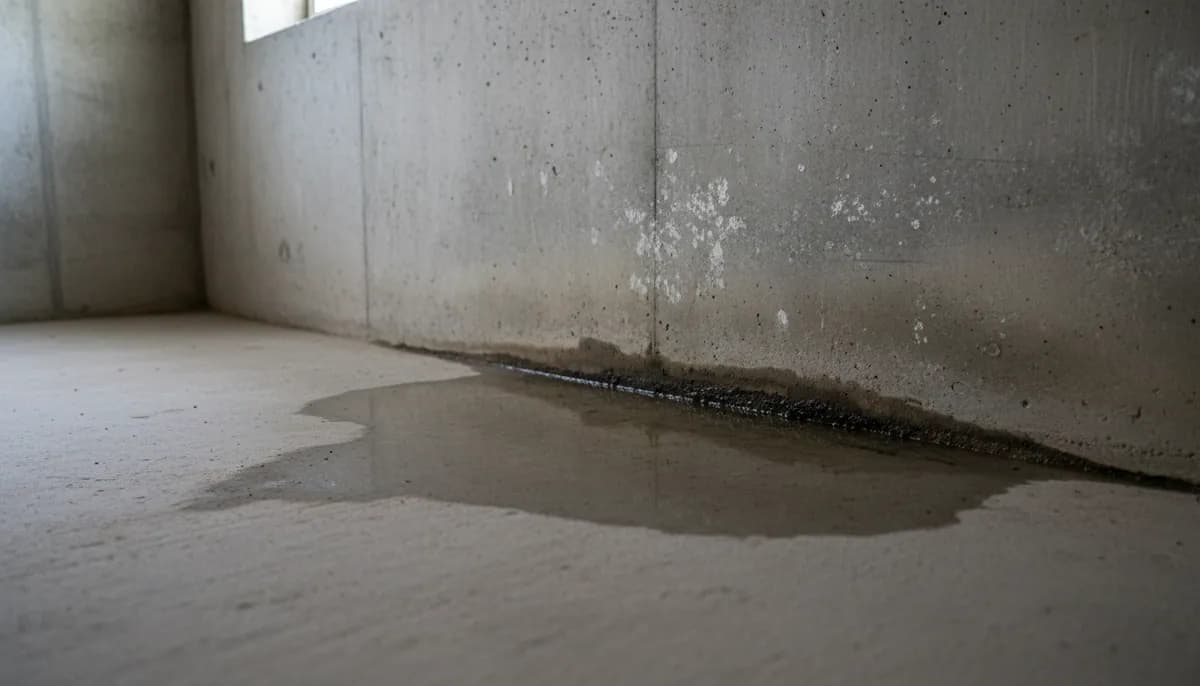
There is a specific kind of Cedar Rapids homeowner who knows the forecast better than the meteorologists. Not because they are interested in weather — because a heavy rain means going down to check the basement, and they have learned to check before it becomes a problem rather than after.
If that is you, the good news is that this pattern has a short list of causes, and four of the six fixes are things you can handle in an afternoon for under $200.
First: What The Pattern Tells You
Water that appears only after heavy rain is diagnostically useful. It rules out most plumbing causes at once — a supply line does not care about the weather. What you have is surface or ground water reaching the foundation faster than the site can drain it, then finding a path through.
Where it appears narrows it further:
- At the wall-floor joint — the most common. This is the cold joint where the slab meets the wall, and it is never watertight. Water under pressure comes up and through it.
- Down a wall from a specific point — a crack, a form tie hole, or a failed penetration seal.
- Around or below a window — the window well is filling and overtopping.
- Up through the floor or a floor drain — either hydrostatic pressure under the slab, or the drain system backing up.
- Near the sump pit — the pump is not keeping up, or it is not running.
The Six Causes, In Order Of How Often We Find Them
1. Downspouts discharging at the foundation
A roof sheds a genuinely large volume of water. An inch of rain on a 1,500 square foot roof is roughly 900 gallons, and every downspout concentrates a share of that into one spot. If the discharge lands within a few feet of the wall, that water goes straight down into the backfill zone — the disturbed, looser soil right against your foundation — and pools against the wall.
The fix: extensions carrying discharge at least six feet out, further if the grade is flat. Roughly $15 each. This single item resolves more wet-basement complaints than everything else on this list combined.
2. Grade sloping toward the house
Soil settles over decades, especially the backfill placed during construction. What was originally sloped away from the house gradually flattens and then reverses, so rain runs toward the foundation instead of away.
The fix: build the grade back up so it falls roughly six inches over the first ten feet. Use soil, not mulch or decorative rock — those hold water rather than shedding it. A few yards of fill and a weekend.
3. Clogged or undersized gutters
Gutters that overflow deliver their water in a sheet directly along the foundation line, which is functionally the same as having no gutters at all. In Cedar Rapids the autumn leaf load is the usual culprit, and the overflow happens in exactly the heavy rains that matter.
The fix: clean twice a year, spring and late autumn. Check them during an actual downpour — that is when overflow points are obvious.
4. Window wells with no drainage
A window well is a bucket set into the ground against your basement wall. If its drain is clogged or was never installed, it fills during heavy rain and eventually comes over the window frame — which is not built to hold back standing water.
The fix: clear the well down to gravel, verify the drain, and fit a well cover. Covers run $30-$100 and eliminate the problem outright.
5. Sump pump not keeping up — or not running
Heavy rain is exactly when a sump pump is under maximum load, which is exactly when its weaknesses surface: a failed float switch, a pump undersized for the inflow, a discharge line that freezes or clogs, or a power outage during heavy rain that took the pump down at the worst moment.
The fix: test it before the spring rains by pouring water into the pit until it cycles. If the house relies on the pump, a battery backup is the difference between a dry basement and a full one during an outage. More detail in sump pump failure.
6. Hydrostatic pressure through the wall or slab
When the surrounding soil is fully saturated, water pressure acts on every square inch of the foundation. Concrete is porous. Under sustained pressure, water is pushed through the material itself and through any crack, and it will appear at the wall-floor joint even where there is no visible defect.
The fix: this is the one that is not a weekend job. It means addressing the drainage system — a functioning exterior perimeter drain, or an interior drainage system routed to a sump. It is a foundation and waterproofing trade, not a restoration one, and it is worth understanding that distinction before hiring anyone: waterproofing vs. restoration.
The Order To Work Through It
Do the cheap things first, in this order, and re-observe after the next heavy rain before spending anything larger:
- Extend the downspouts.
- Clean the gutters and watch them during heavy rain.
- Cover and clear the window wells.
- Test the sump pump and add a backup if the house depends on it.
- Regrade the soil against the foundation.
- Only then consider drainage or waterproofing work — with a contractor who has seen the site during rain.
A surprising share of Cedar Rapids basements stop taking on water after steps one through three.
Why It Still Needs Drying
The mistake in this whole category is treating recurring seepage as normal because it always dries up. The slab dries. The carpet pad, the bottom of the drywall, the stored cardboard, and the framing behind a finished wall dry far more slowly — and in a basement that goes through this cycle several times a year, they may never fully dry between events.
That is how a basement with no dramatic incident develops a persistent musty smell, and eventually growth behind a finished wall. If your basement is finished and it takes on water more than occasionally, the drying matters as much as the prevention — how to dry a wet basement properly covers the equipment side.
And if a rain has just put real water on the floor rather than a damp patch, call before it has time to move into the walls. That call is cheap on day one and expensive on day five.