
Sump Pump Failure in Cedar Rapids: Emergency Guide
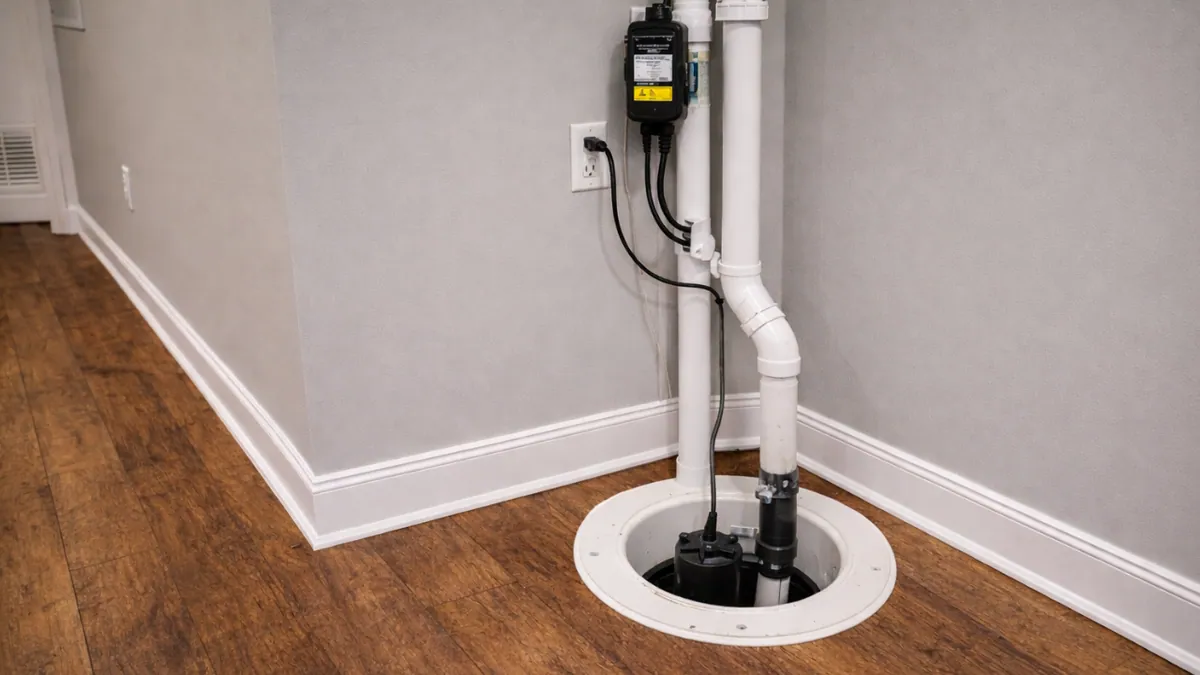
Sump pump failure is the leading cause of basement flooding in Cedar Rapids. Across our service area, sump-related emergencies account for roughly 40% of all basement water damage calls — more than burst pipes, sewer backups, and foundation seepage combined. The pumps fail predictably, usually during the heavy rain events when you need them most, and usually because of one of three failure modes that are all preventable.
Why Cedar Rapids Basements Depend on Sump Pumps
Cedar Rapids sits on terrain with high groundwater patterns and clay-heavy soils that hold water against foundations. Most homes built in the last 40 years include weeping tile drainage systems around the foundation perimeter that collect groundwater and direct it to a sump pit, where the pump lifts it out and discharges it away from the home. Without the pump, that collected water has nowhere to go except up into the basement.
The pump runs anytime the pit fills above the float switch threshold. In normal conditions, it cycles a few times per day. During heavy rain or spring thaw, it may cycle every few minutes. The pump is doing exactly the work it's designed to do — but if it stops, water rises within minutes.
The Three Sump Pump Failure Modes
Mode 1: Motor or Capacitor Failure
Sump pump motors have a finite service life. Quality cast-iron pumps with continuous-duty motors last 10-15 years. Builder-grade plastic pumps installed in many Cedar Rapids subdivisions in the 2000s often last only 5-7 years.
Failure typically happens during the rain events that produce the most demand — extended cycling burns out a marginally- functioning motor. The pump that worked fine during normal weather quits during a 2-inch rain event when it's running every 2 minutes for hours.
Warning signs: unusual sounds during cycling (grinding, whining), pump cycling more frequently than usual at the same water levels, motor running but pump not actually moving water, visible rust or corrosion on accessible components.
Mode 2: Float Switch Sticking
The float switch is the trigger that tells the pump to start. The pivot point can wear out, debris can lodge against the float, or biological growth can block the movement. The result is a pump that doesn't start when water rises — even though the pump itself is fine.
Sometimes the failure is the opposite: pump running continuously because the float won't signal off. This burns out the motor relatively quickly and is just a delayed version of the first failure mode.
Warning signs: visible debris in the sump pit, pump running continuously without water present, pump not running when water is clearly above the normal trigger level.
Mode 3: Power Loss During Heavy Rain
The same severe weather that produces the most rain often knocks out residential power. Without battery or water-powered backup, the pump simply isn't running when it's needed most. Cedar Rapids power outages during severe weather can last hours; a pump that's out for 4 hours during heavy rain produces a flooded basement.
This isn't actually a pump failure — the pump is fine. It's a system failure. The fix is backup power.
How to Test Your Sump Pump
Test twice a year — once in early spring (before peak groundwater season) and once in early fall (before winter rain and freeze season).
- Visual inspection: remove the pit lid, look for debris, rust, and cracking. Confirm the float moves freely.
- Water test: pour 5-10 gallons of water into the pit. The float should rise, pump should activate, water should be evacuated through the discharge line.
- Discharge inspection: verify water actually exits at the exterior discharge point. Frozen discharge lines are a winter failure mode.
- Backup unit test (if equipped): trigger the backup system per manufacturer instructions to confirm it activates when primary fails.
- Battery test (if battery backup): check battery voltage, replace per manufacturer schedule (typically every 5 years).
Active Sump Pump Failure: Emergency Response
If you discover an active sump failure with water rising in the pit:
- Determine the cause if possible. Power out? Pump silent (motor failure)? Float stuck?
- If safe (no electrical hazard): reach into the pit and verify the float moves freely. A stuck float can sometimes be freed manually.
- Activate backup if equipped.If you have a battery backup unit that hasn't kicked in, confirm it's connected and charged.
- Call for emergency replacement from a local plumber if the pump has failed. Many Cedar Rapids plumbers offer emergency sump pump replacement during severe weather events.
- Bail manually if the situation is dire. A 5-gallon bucket and a willing helper can match modest groundwater inflow rates short-term.
- Call us if water has reached the basement floor. Once standing water is in living space, mitigation needs to start regardless of whether the pump is fixed.
What to Expect During Restoration
Sump pump failure flooding is typically Category 1 (clean groundwater) unless the failure occurred during a sewer backup event. Standard mitigation:
- Extraction with submersible pumps for deep water and truck-mounted extractors for finish-out. See our water extraction page.
- Controlled demo of unsalvageable carpet pad, lower drywall sections, and soaked baseboards
- Antimicrobial treatment if water sat more than a few hours
- Professional-grade drying for 5-7 days with air movers and LGR dehumidifiers
- Pump replacement coordinated as part of the project — usually with battery backup added
- Reconstruction as needed for finished basements (carpet pad replacement, drywall, paint, baseboards)
Total project time runs 1-4 weeks depending on whether the basement is finished and how much reconstruction is required. See our basement water damage restoration page for the full scope.
Prevention: The Investments That Matter
Quality Pump Replacement
When pump replacement comes — whether due to failure or preventive replacement at end of service life — invest in a quality unit. Cast-iron housing, continuous-duty motor, appropriate GPH capacity for your basement's typical inflow. Cost: $300-$700 installed for a quality primary pump. Builder-grade plastic units at $150 are false economy — you'll be replacing them again sooner.
Battery Backup Unit
$300-$700 installed. Provides 1-3 days of operation during power outages. Battery typically lasts 5 years and needs replacement (~$100-$200) on schedule. Essential for any Cedar Rapids home with a finished basement.
Water-Powered Backup Unit
$500-$1,000 installed. Uses municipal water pressure to pump out the sump — works as long as you have water pressure, regardless of electrical status. Doesn't work for homes on private well systems. Some Cedar Rapids homeowners install both battery and water-powered backups for full redundancy.
Sealed Sump Pit Lid
$50-$200 installed. Reduces basement humidity, prevents radon entry from the soil below, and reduces the risk of debris falling into the pit. Should be standard on any modern installation.
Discharge Line Maintenance
Confirm discharge directs water at least 6 feet from the foundation, ideally further. Check for ice blockages during winter — frozen discharge lines cause pump failure even when the pump itself is working fine.
Annual Pump Inspection and Twice-Yearly Testing
Two minutes of testing twice per year prevents most sump pump emergencies. The pumps fail predictably; testing catches the warning signs before the next rain event.
Insurance Considerations
Sump pump failure coverage varies by carrier in Iowa. Standard homeowners often excludes damage from sump failure unless you've added a specific endorsement. Common endorsement names:
- Sump pump and water backup endorsement
- Water backup of sewer or drain coverage
- Sump pump rider
Cost typically $50-$150/year. Check your declarations page; if you don't see specific sump or water backup coverage, contact your agent and add it. See our Iowa insurance claim guide for general policy review.
For Active Sump Pump Emergencies
For active basement flooding from sump pump failure in Cedar Rapids, our 24/7* line connects to our dispatch team for a fast emergency response across the metro. We coordinate with local plumbers for pump replacement as part of the same project.