Basement Water Damage in Cedar Rapids: Causes and Solutions
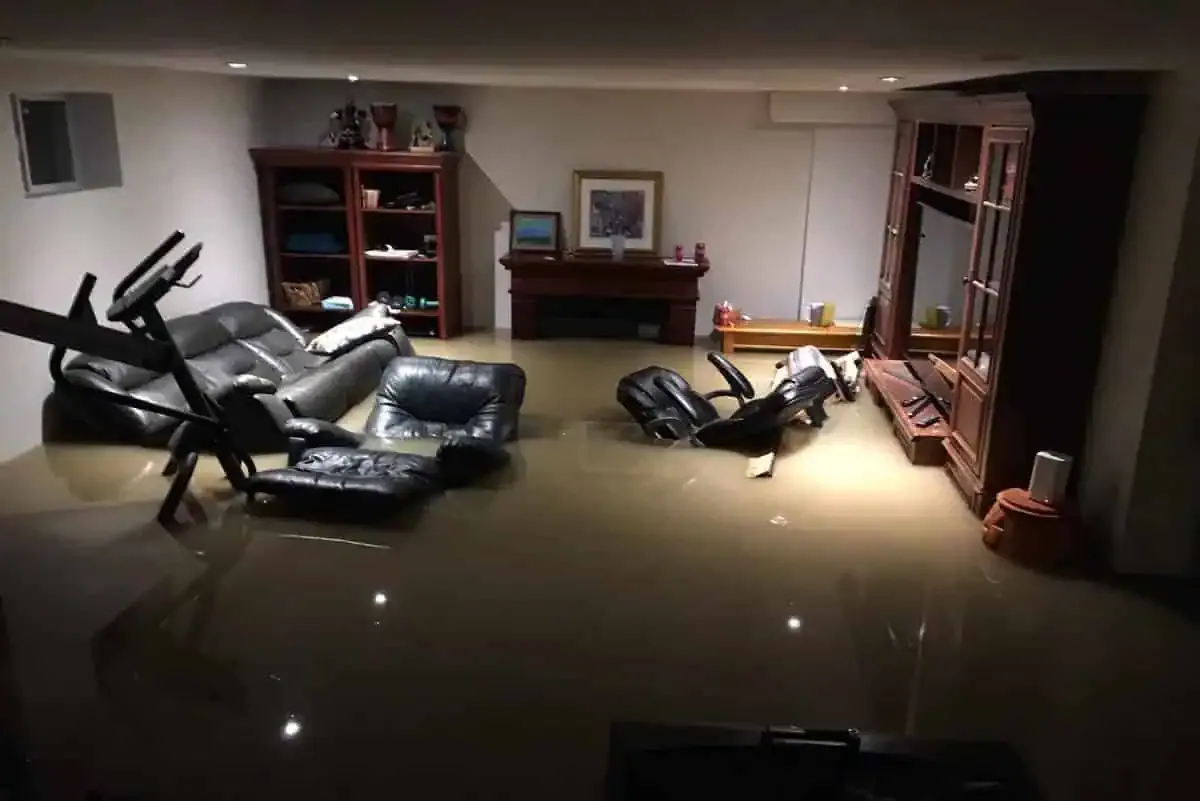
Basement water damage is the single most common water emergency we respond to in Cedar Rapids — more frequent than burst pipes, appliance failures, and roof leaks combined. After thousands of basement restorations across the metro, the causes cluster into five distinct categories. Each has specific warning signs, specific fixes, and specific prevention strategies.
Cause #1: Sump Pump Failure (40% of Calls)
Sump pump failure is the dominant cause of basement water damage in Cedar Rapids subdivisions, particularly in Hiawatha, Marion, and Northwest Cedar Rapids. Three failure modes:
Motor or Capacitor Failure
Builder-grade sump pumps installed in 2000s-era subdivisions are reaching end-of-life now. The pump cycles normally for years, then quits — often during heavy rain when it's needed most. Quality pumps last 10-15 years; cheap pumps sometimes 5-7.
Float Switch Sticking
The float that triggers the pump can stick due to debris, biological growth, or wear at the pivot. Pump fails to start even though water is rising. Sometimes the pump runs continuously instead, burning out the motor.
Power Loss During Heavy Rain
The same heavy rain events often knock out residential power. Without battery or water-powered backup, your pump simply isn't running when it's needed most.
Prevention
- Test your pump twice a year — pour 5 gallons of water into the pit and confirm it cycles
- Replace builder-grade pumps with quality cast-iron units rated for your basement's GPH demand
- Install a battery backup or water-powered backup unit
- Keep the sump pit lid sealed (also helps with radon mitigation)
- Watch for debris in the pit — clean annually
Cause #2: Foundation Seepage (25% of Calls)
Foundation seepage dominates older Cedar Rapids neighborhoods — Czech Village, Bever Park, Mound View, southeast Cedar Rapids. Clay-heavy soils hold water against foundations during heavy rain, and any crack, mortar joint failure, or damp-proofing breakdown lets water through.
Why Clay Soils Are the Issue
Eastern Iowa soils are clay-heavy, which means they hold water rather than draining it. After heavy rain, the ground around your foundation becomes saturated and the water pressure (called hydrostatic pressure) pushes against foundation walls and the slab. Any path through the foundation — crack, joint, porous concrete — eventually admits water.
Common Seepage Locations
- Cracks in poured concrete walls (vertical cracks especially)
- Mortar joints in concrete block or stone foundations
- Cove joint where the wall meets the floor
- Floor cracks (less common but more difficult to repair)
- Around basement windows where flashing has failed
- At pipe penetrations through the foundation
Prevention
- Exterior grading: ground should slope away from the foundation 6+ inches in the first 10 feet
- Downspout extensions: direct roof runoff at least 6 feet from the foundation, ideally further
- Window well covers: prevent rain from filling window wells and seeping in around windows
- Interior weeping tile retrofit: for chronic seepage, an interior French drain system collects water and directs it to the sump
- Exterior waterproofing: the gold standard, but expensive ($10-25K depending on access). Recommended for severe chronic seepage.
Cause #3: Sewer Backup (15% of Calls)
Sewer backups are the most expensive and most dangerous form of basement flooding because the water is Category 3 (black water) requiring biohazard protocols. Cedar Rapids' older sanitary sewer system has documented capacity issues, and combined sewer overflows during heavy rain push wastewater back through residential laterals.
Why Cedar Rapids Sees This
Older sections of Cedar Rapids — downtown, Czech Village, parts of southeast — still have sections of original early-20th-century clay-tile sanitary sewer mains. Combined sewer mains carry both surface runoff and sanitary sewer in the same pipe, and during heavy rain they exceed capacity. The result: wastewater backs up through residential floor drains, toilets, and shower drains.
Prevention
- Sewer backup endorsementon your insurance policy. Standard homeowners doesn't cover sewer backup — the endorsement is $50-$120/year and essential.
- Backflow preventer valve installation ($1,500-$3,000). Mechanical valve prevents wastewater from flowing backward into your home during sewer overflow events.
- Periodic lateral line inspection with camera scope, particularly in older homes with mature tree root systems. Catches blockages before they cause backups.
Cause #4: Burst Pipes and Appliance Failures (15% of Calls)
Burst supply lines on water heaters, washing machines, and upstairs bathroom plumbing flow downward — and basements are downhill. A frozen pipe in an upstairs wall can dump hundreds of gallons into a finished basement before discovery. See our burst pipe emergency guide and frozen pipes Iowa winter guide for prevention specifics.
Cause #5: Spring Thaw Groundwater (5% of Calls)
Cedar Rapids spring thaw produces a recurring wave of basement water damage as the frozen ground releases winter's snow load while underground soils are still saturated. This category overlaps with foundation seepage but is more acute — often producing multiple inches of water in basements that rarely have problems otherwise. Sudden groundwater intrusion through a sump-served system is generally a homeowners-covered loss when a covered failure (like a sump pump quitting) is involved.
What to Do During Active Basement Water Damage
Whether the source is sump failure, seepage, or sewer backup:
- Don't enter standing water if there's any chance of electrical contact. Cut basement power at the breaker box first.
- Identify the source if safe to do so. Sump failure is obvious (pit overflowing, pump silent). Seepage shows along walls. Sewer backup smells distinctive.
- Photograph and video the water damage for insurance documentation before any cleanup.
- Move what you can from the affected area — stored items, electronics, sentimental items.
- Call for professional help. Basement water damage restoration is rarely a DIY job — proper extraction requires professional-grade pumps and the cleanup scope expands quickly without prompt mitigation.
Restoration Process for Basement Water Damage
Detailed in our basement water damage restoration page. The sequence is extraction, controlled demo of unsalvageable material, antimicrobial treatment, structural drying with professional-grade equipment for 5-7 days, and reconstruction. Most basement water damage jobs are fully restored within 2-4 weeks total.
Long-Term Prevention Investments
For Cedar Rapids homeowners with finished basements, the prevention investments that pay off most reliably:
- $300-$1,000: Battery backup or water-powered backup sump pump
- $50-$120/year: Sewer backup endorsement on insurance
- $1,500-$3,000: Backflow preventer valve installation
- $500-$2,000: Exterior drainage improvements (downspout extensions, regrading)
- $5,000-$15,000: Interior weeping tile retrofit for chronic seepage
The math: a single basement water damage restoration averages $5,000-$15,000. Most prevention measures pay for themselves on the first prevented event.