Frozen Pipes in Iowa Winter: Prevention and Emergency Response
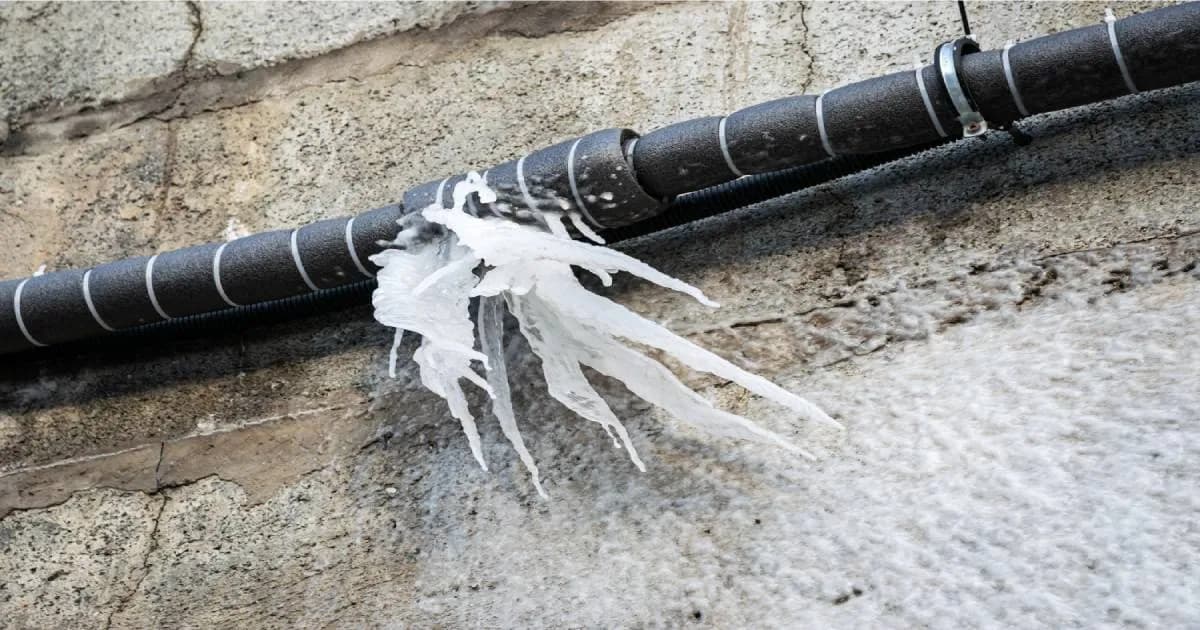
Iowa winter produces frozen pipe failures every year. Cedar Rapids hits sustained sub-zero temperatures most winters, and at least one polar vortex event tests every home in the metro. Frozen pipe failures account for the largest share of December-February water damage calls we run, and the damage is often substantial — burst supply lines run 100+ gallons per hour while the homeowner is at work, on vacation, or asleep.
This guide covers prevention (the cheap part) and emergency response (the expensive part). Most frozen pipe events are preventable; the rest are at least limitable.
Why Pipes Burst When They Freeze
Counterintuitively, frozen pipes don't typically burst at the freeze itself. They burst because freezing water expands ~9% in volume, which pressurizes the water trapped between the freeze and the closed end of the system. That pressure has to go somewhere, and it forces a rupture somewhere along the pressurized line — sometimes right at the freeze, sometimes feet away at a weak point.
Two practical implications:
- The visible damage may not be where the freeze actually was
- The rupture often happens during the thaw, not during the freeze, when the ice melts and the pressurized water finally escapes
This is why homeowners often discover frozen pipe damage 12-48 hours after the cold snap ends — the freeze created the rupture, but the leak only flowed water once thawing occurred.
Where Pipes Freeze in Cedar Rapids Homes
Bonus Rooms Over Garages
The most common failure location in newer Cedar Rapids subdivisions (Hiawatha, Marion, Northwest Cedar Rapids). Cold air from the unheated garage rises through the floor cavity below the bonus room. Supply lines running through this cavity to bonus-room or master-bath fixtures freeze readily during sustained cold.
Attic Supply Lines
Two-story homes often have supply lines for upstairs bathrooms running through the attic. Without proper insulation around the lines themselves, attic temperatures can match outdoor temperatures. We see attic supply line failures in homes throughout the metro.
Exterior Wall Plumbing
Kitchen sinks on exterior walls, bathroom plumbing on exterior walls, and any fixture where supply lines run between the wall sheathing and the interior drywall. Common in 1990s-2010s subdivisions throughout Cedar Rapids, Marion, and Hiawatha.
Crawl Spaces
Vented crawl spaces (more common in older Cedar Rapids homes) allow cold air infiltration directly to plumbing running underneath the floor. Conditioned crawl spaces are less vulnerable but still possible.
Garage Plumbing
Utility sinks, hose bibs that lead through the garage wall, and any plumbing in unheated garage space. Common failure in homes where the garage wall water heater or laundry utility runs alongside.
Basement Crawl Areas
Particularly in older Cedar Rapids homes (Czech Village, Bever Park, Mound View), the crawl-area portions of basements can be much colder than the finished portion. Supply lines and drain stacks running through these areas can freeze.
Unoccupied Vacation Homes
Snowbird-pattern homeowners who lower the thermostat to 50°F while in Florida sometimes find that 50°F at the thermostat doesn't mean 50°F at exterior wall plumbing — it can be much colder there. Vacant homes through Iowa winter are at elevated risk.
Prevention: Before the Cold Snap
Insulate Vulnerable Pipes
Pre-formed foam pipe insulation costs about $1 per linear foot at any hardware store. Apply to:
- All supply lines in attics, crawl spaces, and unheated basements
- Lines running through exterior walls (where accessible)
- Lines in bonus rooms over garages
- Outdoor hose bib supply lines
Seal Air Leaks
Cold air infiltration is what makes pipes freeze. Seal:
- Rim joist gaps in basements (spray foam insulation works well)
- Gaps around electrical and plumbing penetrations
- Garage-to-house door weatherstripping
- Crawl space vents during winter (close them or block them)
Add Heat to Vulnerable Areas
For chronically cold spaces (basement utility rooms, garage- adjacent walls), supplemental heat during cold snaps:
- Heat tape on accessible supply lines (UL-listed only, follow instructions)
- Space heaters in basement utility rooms (with safety considerations)
- Open cabinets containing plumbing on exterior walls to allow warm air circulation
Disconnect Outdoor Hoses
A connected hose traps water in the spigot supply line. That water freezes, expands, and ruptures the supply line inside the wall. Disconnect every fall, ideally before first freeze. Drain frost-proof hose bibs by removing the hose and opening the valve briefly.
Maintain Heat Year-Round
Don't lower thermostats below 55°F when leaving for extended periods. For vacation homes, smart thermostats with remote monitoring are essential — and remote-control circuit breakers for a quick water-system shutoff if problems are detected.
During a Cold Snap: Active Prevention
When forecasts show sustained sub-20°F temperatures or wind chills below 0°F:
- Drip cold-water faucets served by vulnerable supply lines. Pencil-lead-thick stream is plenty.
- Open cabinets containing plumbing on exterior walls. Warm room air circulates around the pipes.
- Maintain consistent indoor temperature— don't lower the thermostat at night during cold snaps.
- Run any heat tape you have installed.
- Check vulnerable areas periodically for frost on pipe surfaces or reduced water flow at distant fixtures.
If Your Pipes Are Frozen (But Not Yet Burst)
Signs of a frozen pipe: a faucet that won't flow when opened (or only flows a trickle) while other faucets in the home work normally, frost on visible pipe sections, or unusual cracking/popping sounds in plumbing walls.
Action steps:
- Open the faucet served by the frozen line. This relieves pressure as the ice melts.
- Apply gentle heat to the suspected freeze location: hair dryer, heating pad, towels soaked in hot water. Work from the faucet end backward toward the freeze.
- Never use open flame (propane torch, candles) — house fires are a real risk and the heat is too concentrated.
- If the freeze is inside a wallor you can't locate it, call a plumber. Don't try to open the wall yourself in a winter emergency.
- Be prepared to shut off water if a rupture is found during thawing — keep yourself between the frozen area and the main shutoff.
If a Frozen Pipe Has Burst
Follow our burst pipe emergency action plan: shut off the main water valve, cut electrical power if needed, document the damage, call insurance, call a restoration company. Time matters — frozen pipe events that flow water for hours produce dramatically more damage than those caught in the first 30 minutes.
Insurance Coverage
Frozen pipe damage is generally covered under standard Iowa homeowners insurance — it's the textbook case of sudden, accidental water damage. Coverage usually includes mitigation, structural repair, contents, and additional living expenses.
Two coverage caveats:
- Reasonable heat maintenance. Carriers generally require homeowners to maintain reasonable heat. If a frozen pipe failure occurred because the home was vacant with no heat, coverage may be reduced or denied.
- Pipe repair is separate. The plumber fixing the burst pipe is a maintenance cost, not a water-damage cost. Insurance covers the water damage; you cover the pipe repair.
For more on Iowa coverage details, see our Iowa water damage insurance claim guide.
Cedar Rapids Winter Reality
Iowa winters consistently produce sustained sub-zero temperatures, polar vortex events, and extended cold periods. The question isn't whether your home will face conditions that could freeze pipes — it's whether you've prepared for the conditions you know are coming. A few hours of fall preparation prevents the majority of winter pipe failures.