Mold After Water Damage: When to Call a Cedar Rapids Specialist
Water damage that isn't dried within 48 hours produces mold. Cedar Rapids' humidity makes the timeline tighter than in drier climates. The question isn't whether mold will form after a missed drying window — it's whether the growth is small enough to address yourself or large enough to need a professional. This guide tells you which is which.
How Mold Forms After Water Damage
Mold spores are present everywhere — in outdoor air, in indoor air, on every surface in your home all the time. Most of those spores are dormant and harmless. Three things wake them up and let them grow into colonies:
- Moisture — water above ambient humidity, persistent for 24+ hours
- Food source — organic material like drywall paper, wood, paper, fabric, dust
- Temperature — most household molds thrive at 60-90°F (i.e., normal indoor temperatures)
Eliminate any one and you stop growth. In water damage scenarios, you can't eliminate temperature or food source — you have to eliminate moisture, fast.
The Cedar Rapids Mold Timeline
From the moment water damage occurs:
- Hours 0-24: water saturates porous materials. No visible mold yet, but conditions are setting up.
- Hours 24-48: microbial growth begins on cellulose surfaces (drywall paper, wood, paper, cotton). Not yet visible without testing.
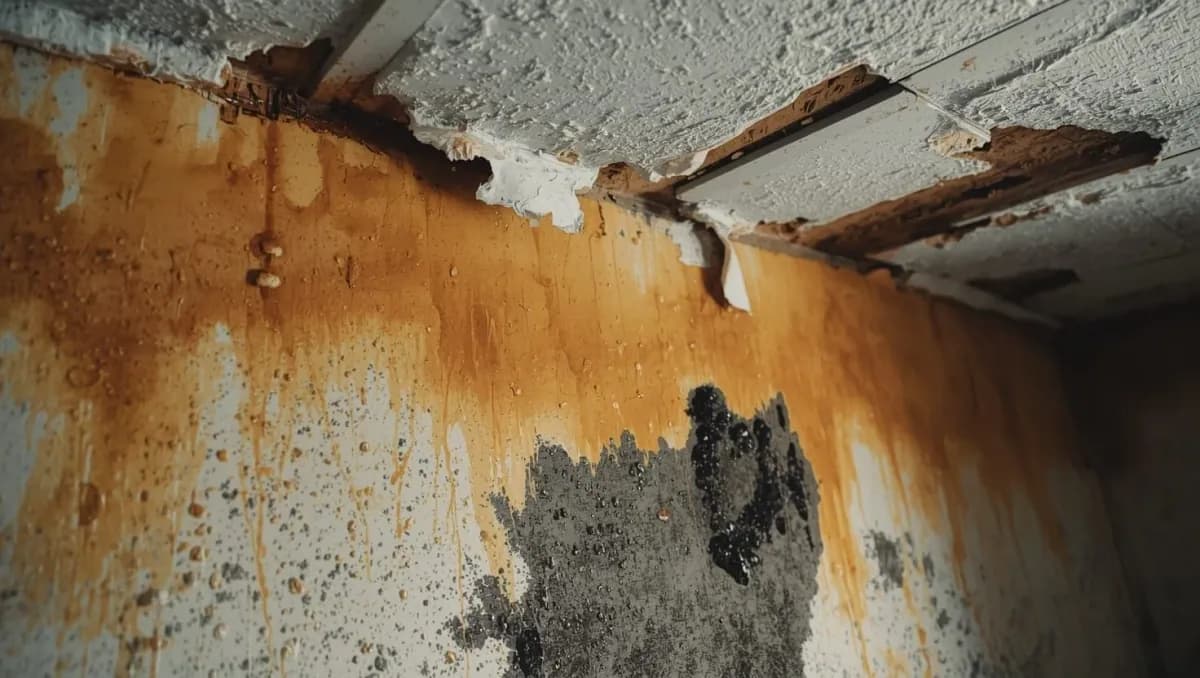
- Days 2-4: visible colonies begin appearing. White, gray, or pink fuzzy patches on drywall and wood.
- Days 4-10: colonies expand and color deepens. Black, dark green, or yellow growth becomes obvious. Spore counts in the air rise.
- Weeks 1-4: structural mycelium penetration of porous materials. Removal becomes the only option for affected drywall, insulation, and other porous surfaces.
- Months: ecosystem expansion through HVAC, into wall cavities, behind cabinets. Whole-home contamination becomes possible.
Iowa's summer humidity (65-75% indoor RH common in unconditioned basements) accelerates the early phases. We see visible growth within 36 hours during summer events.
When DIY Is Acceptable
For very small, surface-only mold growth on hard non-porous materials, DIY is reasonable:
- Less than 10 square feet of total visible growth
- Growth is on hard surfaces (tile, glass, sealed metal, finished concrete)
- Source moisture is no longer present
- No occupant has respiratory sensitivity, asthma, or compromised immunity
- You can wear proper PPE (N95 minimum, gloves, eye protection)
Cleaning approach for these small jobs: detergent and water first (physical removal), then EPA-registered antimicrobial. Avoid bleach on porous surfaces — it doesn't penetrate, and once the surface dries, mold returns from the substrate.
When You Need a Professional
Call an IICRC S520-certified specialist if any of the following apply:
- More than 10 square feet of visible growth
- Growth on porous surfaces (drywall, insulation, fabric, particle board)
- Mold inside HVAC ductwork or near return vents
- Strong musty smell with no visible source (likely hidden growth)
- Anyone in the household has respiratory issues, asthma, or immune compromise
- The water source is still active or recurring
- The space requires extensive removal of building materials
- You suspect mold but can't locate it (testing required)
What Professional Mold Remediation Looks Like
IICRC S520 protocols (the industry reference standard) define what real mold remediation involves. The sequence:
- Assessment and source identification — finding the moisture source and the extent of contamination
- Air quality testing (optional) — establishing baseline spore counts before remediation
- Containment — sealing the affected area with 6-mil polyethylene and zipper doors, sealing HVAC registers
- Negative air pressure — HEPA-filtered air scrubbers vented outside to keep spores inside containment
- PPE for crew — P100 respirators, full Tyvek suits, gloves, boot covers
- Controlled removal — cutting out contaminated drywall, insulation, carpet, baseboards; double-bagging and disposing
- HEPA vacuuming and damp wiping — multiple passes of all surfaces inside containment with EPA- registered antimicrobials
- Antimicrobial treatment — final pass on framing, subfloor, and remaining surfaces
- Drying — professional-grade dehumidification until moisture content returns to dry standard
- Post-remediation verification — independent air sampling and visual inspection confirms clearance
- Reconstruction — drywall, insulation, paint, flooring, trim restored
See our mold remediation page for the full protocol detail.
Cedar Rapids-Specific Mold Patterns
After working hundreds of mold projects in this market, the patterns we see most:
Mold From Undried Past Water Damage
Homes that had a water event — a burst pipe, appliance leak, or basement seepage — that wasn't properly dried sometimes show mold issues years later. Hidden growth in wall cavities, behind cabinets, and in insulation that was never fully replaced.
Czech Village and Older Home Plaster Walls
Plaster walls handle moisture differently from drywall. Mold grows inside the lath cavity behind plaster — visible only as efflorescence or staining on the surface, but producing significant spore loads. Detection often requires invasive testing.
Chronic Basement Humidity
Many Cedar Rapids basements run above 60% RH year-round without dehumidification. The result: surface mold on cardboard, fabric, and stored items, plus eventual substrate growth on framing and drywall.
HVAC Drain Pan Mold
Air handler condensate pans and drain lines develop biofilm and mold that becomes airborne through return ducts. Common in older central-air systems, particularly during summer months.
Insurance Coverage for Mold
Iowa homeowners insurance coverage for mold is mixed:
- Mold from a covered water loss (burst pipe, appliance failure) discovered promptly: usually covered up to mold sub-limit ($5,000-$10,000 typical)
- Mold from gradual leaks or deferred maintenance: generally not covered
- Mold from chronic humidity: not covered
- Mold beyond sub-limit: excess is out-of-pocket
For maximum coverage, mold remediation should be packaged with the original water damage claim — not filed separately weeks later as a standalone mold issue. We document the connection between the water event and the mold so the carrier sees it as one claim.
Prevention: The Best Mold Remediation Is the One You Don't Need
Cedar Rapids homeowners can prevent the vast majority of mold issues with a few practices:
- Respond to water damage within 24 hours. The 48-hour window is the difference between a water mitigation job and a water + mold job.
- Run a basement dehumidifier. Target 50% RH year-round. A good basement dehumidifier costs $250-$400 and prevents thousands of dollars of damage.
- Address recurring leaks promptly. Slow leaks under sinks, roof leaks during heavy rain, plumbing drips — fix them, don't let them sit.
- Ventilate bathrooms during showers. Run exhaust fans for 20+ minutes after showers to remove humidity.
- Maintain HVAC systems. Annual cleaning of condensate drain lines and pans prevents mold growth in the system itself.
- Inspect after any water event. Even after restoration, periodic visual checks for signs of recurrence catch problems early.
Active Mold Issue?
For active mold remediation needs in Cedar Rapids and Linn County, our crews handle containment under IICRC S520 protocols — controlled removal, and post-remediation verification. We coordinate with independent environmental hygienists for independent air quality testing when warranted. See our mold remediation service for the full scope.