Water Mitigation vs. Restoration: What Cedar Rapids Homeowners Should Know
After a burst pipe or appliance leak, you will hear two words that sound like the same thing: mitigation and restoration. In Cedar Rapids, Marion and Hiawatha, homeowners often see both on insurance paperwork. They are two different phases of the job, done in order.
Mitigation: Stop the Damage
Mitigation is everything done to keep the damage from getting worse. It happens first, and timing matters because wet drywall, padding and framing can start growing mold within a few days.
- Water extraction: pumping and vacuuming standing water out of carpet, floors and basements
- Moisture mapping: meters and thermal imaging to find where water spread
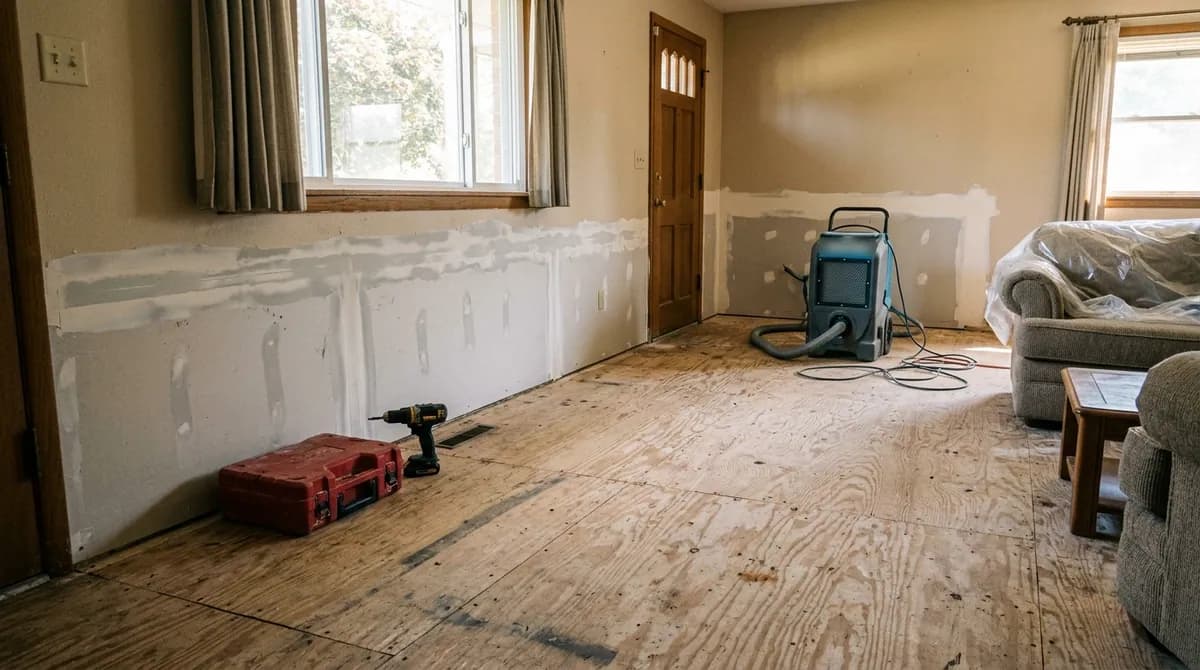
- Controlled removal: cutting out wet padding, baseboard and the bottom of drywall that can't be dried
- Drying: dehumidifiers and air movers until materials read dry
- Monitoring: daily moisture readings and records for insurance
See our water extraction and structural drying services.
Restoration: Put It Back
Restoration starts once the structure is dry. It is construction work: replacing drywall and insulation, installing new flooring, putting back trim and cabinets, and painting. It can take longer than mitigation, especially if materials have to be ordered.
Why the Order Matters
Rebuilding over wet framing or subfloor traps the moisture in the wall. Mold can grow behind brand-new drywall, and the job has to be opened up again. That is why drying is confirmed with readings before anything goes back. Read how long water damage restoration takes for typical timelines.
What This Means for Your Claim
- Report the loss to your insurer promptly.
- Photograph the damage before and during mitigation.
- Keep the drying logs and moisture readings.
- Ask whether the adjuster wants to see the area before rebuilding.
More in our Iowa water damage insurance claim guide.
Common Causes in Linn County Homes
Most mitigation calls in the area start with internal water: frozen or burst pipes, failed supply lines, water heaters, washing machines, dishwashers and sump pump failures. Our first 24 hours guide covers what to do while you wait for help.