
AC Condensate Leaks: The Hidden Summer Water Damage in Cedar Rapids Homes
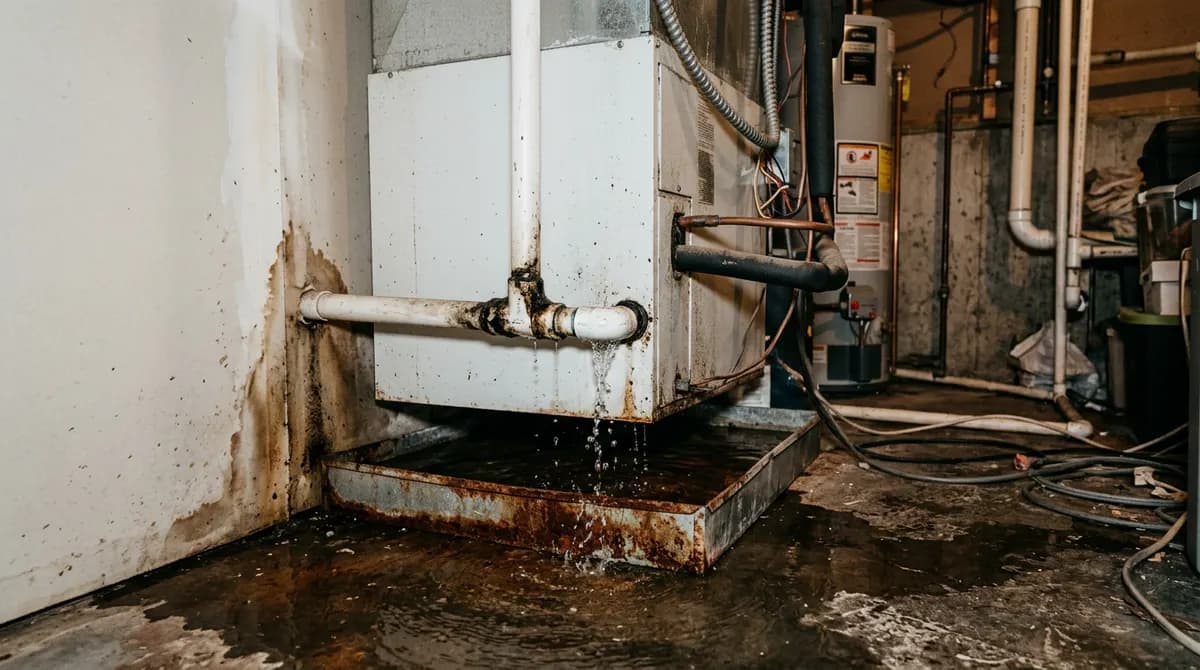
Every July, as Cedar Rapids settles into its most humid stretch of the year, a specific kind of water damage call picks up: the slow AC leak that nobody saw. A clogged condensate line doesn't announce itself like a burst pipe. It overflows a few cups at a time, several times a day, into the ceiling, closet, or utility room around the air handler — right through the weeks when Iowa humidity gives mold everything else it needs. By the time a stain shows or a musty smell arrives, the leak has usually been running for weeks.
How Your AC Makes Water in the First Place
Air conditioning doesn't just cool air — it wrings the humidity out of it. Warm, moist indoor air passes over the evaporator coil, and the moisture condenses on the cold metal exactly like it does on a glass of iced tea in August. That water drips into a pan under the coil and exits through a small PVC drain line — typically 5-20 gallons a day in an Iowa summer. The whole system works until that one drain line doesn't.
The Four Common Failure Points
- Clogged drain line. The #1 cause. Algae and biofilm grow inside the dark, damp line until it closes off. Water backs up into the pan, the pan overflows, and the daily gallons start going into the structure instead.
- Cracked or rusted drip pan.Primary pans on older units rust through; secondary (emergency) pans crack or were never installed. Once the pan fails, there's nothing between the coil and your ceiling.
- Frozen evaporator coil. A dirty filter or low refrigerant ices the coil; when it thaws — often after the system shuts down — it releases far more water at once than the pan and line are sized to handle.
- Disconnected or badly sloped drain line. A line that sags or was knocked loose during other work drips inside the wall or attic where it can run undetected the longest.
Where the Damage Shows Up in Cedar Rapids Homes
It depends on where the air handler lives. In many local homes the unit sits in the basement — leaks there pool on concrete and wick into adjacent finished walls, the gentler version of the problem. In homes with the air handler in a first-floor utility closet, the overflow soaks the closet subfloor and spreads under nearby flooring. The worst case is the attic install, common in newer construction: the overflow lands on the ceiling drywall below, and the first sign is a brown ring spreading across a bedroom ceiling — the same pattern we describe in our roof leak guide, except this one happens in dry weather.
Why Summer AC Leaks Turn Into Mold Problems
Mold needs moisture, food, and time. An AC leak supplies all three better than almost any other failure: the moisture is continuous (renewed every time the system runs), the food is the paper facing of drywall and the dust in insulation, and the time is however many weeks pass before discovery — all during months when ambient humidity in a Linn County home already sits above 60%. We regularly open up a wall behind an air handler and find established growth that started with nothing more than a clogged $2 length of PVC. Our mold remediation page covers what removal involves once growth is established; the mold-after-water-damage guide covers when DIY is still an option.
Found It Wet? Do This
- Turn the system off at the thermostat — every cooling cycle adds more water.
- Check and empty the drip pan if you can reach it safely.
- Photograph the unit, the pan, and every damp surface before any cleanup.
- Call an HVAC tech for the clog — clearing the line and restoring the system is their job.
- Have the wet materials evaluated.If drywall, insulation, or subfloor stayed damp for more than a couple of days, surface drying isn't enough — the moisture inside the assembly is what feeds mold. That evaluation-and-drying step is our job; see structural drying.
The 10-Minute Summer Maintenance Routine
- Pour a cup of distilled vinegarinto the condensate line's access tee every 1-2 months during cooling season.
- Change the filter on schedule — a clogged filter is how coils freeze.
- Glance at the drip pan monthly: standing water in the pan means the drain is already slowing.
- Add a float switchif your system doesn't have one — a $15-40 part that shuts the system off when the pan backs up, turning a ceiling collapse into a service call.
- Attic units: verify the secondary pan and line are intact and actually routed outside (you should see the telltale drip from the eave line when it's working).
Cheap Part, Expensive Neglect
Almost everything on this page is preventable with vinegar, a filter, and a float switch — a $50 summer, all in. What isn't preventable after the fact is the mold that establishes when a hidden leak runs through an Iowa July. If you've found the stain, the smell, or the wet closet floor, shut the system off and get the wet materials properly assessed before the humidity finishes the job.