
Kitchen Sink Leaks: Cabinet, Subfloor and Ceiling Damage
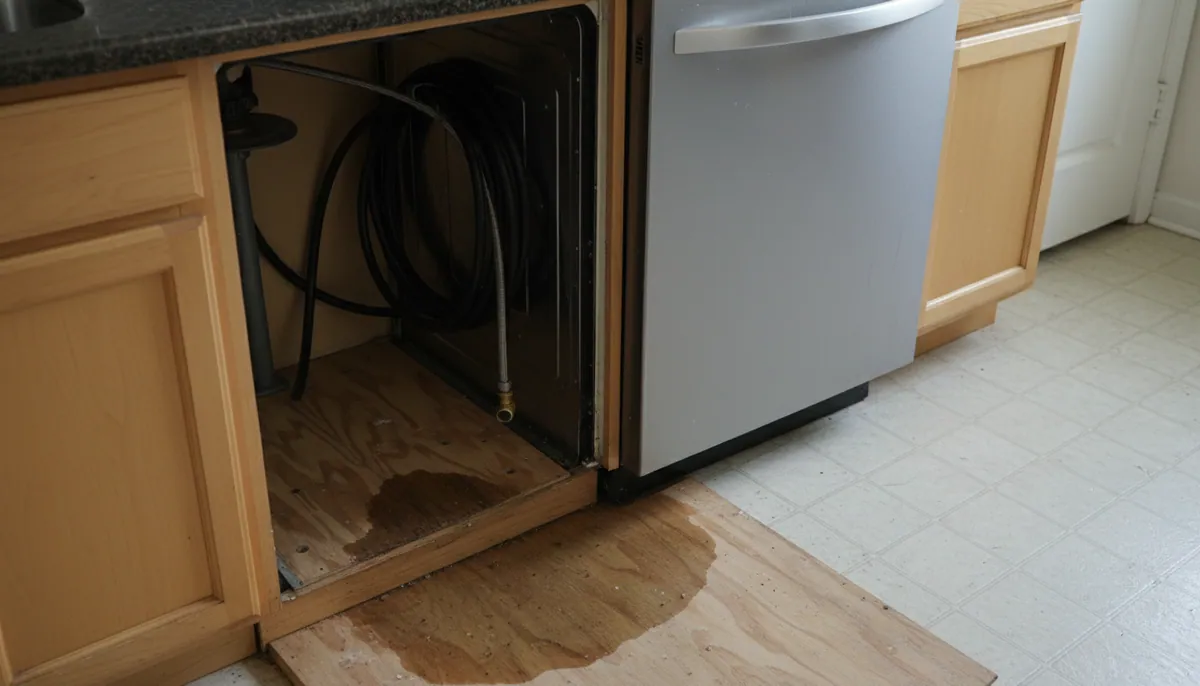
The cabinet under the kitchen sink is the most crowded space in most homes: supply lines, a drain trap, the garbage disposal, the dishwasher hose, sometimes a water filter, and a pile of cleaning supplies on top. When something there starts to leak, the supplies hide it, and the water quietly soaks into the cabinet floor.
Most homeowners in Cedar Rapids find out when they reach for the dish soap and the cabinet floor is warped, or when a soft spot appears in the kitchen floor in front of the sink.
The Usual Sources
- Supply lines and shutoff valves to the faucet. Braided lines age and crack; old valves weep at the stem.
- The drain trap and tailpiece. Slip nuts loosen over time, and plastic or old metal traps crack.
- The garbage disposal. Seals at the sink flange, the dishwasher inlet and the bottom of the unit can all leak.
- The dishwasher drain hose where it connects under the sink. See dishwasher and ice maker leaks.
- The faucet base. Water from the countertop runs down through worn seals around the faucet and sprayer.
- Water filters and reverse osmosis units, whose small plastic fittings can crack.
Signs of a Leak Under the Sink
- A warped, swollen or stained cabinet floor
- A damp or musty smell when you open the cabinet
- Cleaning bottles with water rings or rust on their bottoms
- Lifting or soft flooring in front of the sink
- A stain on the basement ceiling under the kitchen
What to Do
- Empty the cabinet so you can see.
- Shut the valves under the sink, or the main valve if they will not close. See our shutoff valve guide.
- Dry the area and run water one fixture at a time (faucet, disposal, dishwasher) to see where the drip starts.
- Photograph the cabinet, the floor and the basement ceiling below.
- Have a plumber fix the source, then get the wet materials checked.
The Damage You Cannot See
Most kitchen cabinets sit on the subfloor, and the finished flooring often runs only to the front of the cabinets. Water that leaks through the cabinet bottom reaches the subfloor directly and can spread under the flooring and under neighboring cabinets. In homes with a basement, it then shows up as a stain on the basement ceiling.
Wet particleboard and subfloor stay wet for a long time in that closed space, and mold grows on the underside of the cabinet and the back of the drywall, which is when mold remediation in Cedar Rapids becomes necessary. See mold after water damage.
How It Gets Dried
A restoration tech checks moisture in the cabinet, the subfloor, the flooring in front of the sink and the ceiling below. Common steps:
- Removing the toe kick to open the space under the cabinets
- Drilling small holes in the cabinet base to push dry air in
- Replacing a cabinet floor that has swollen or crumbled
- Lifting flooring that has trapped water underneath it
- Air movers and a dehumidifier until readings are back to normal
If wood flooring in front of the sink has started to cup, see wood floor cupping after a leak. For the drying process in general, see structural drying.
Keep It From Happening Again
- Look under the sink once a month with a flashlight.
- Replace old supply lines and stiff valves.
- Put a waterproof tray or mat on the cabinet floor.
- Add an inexpensive leak sensor at the back of the cabinet.