
The Mold Remediation Process, Step by Step, for Cedar Rapids Homes
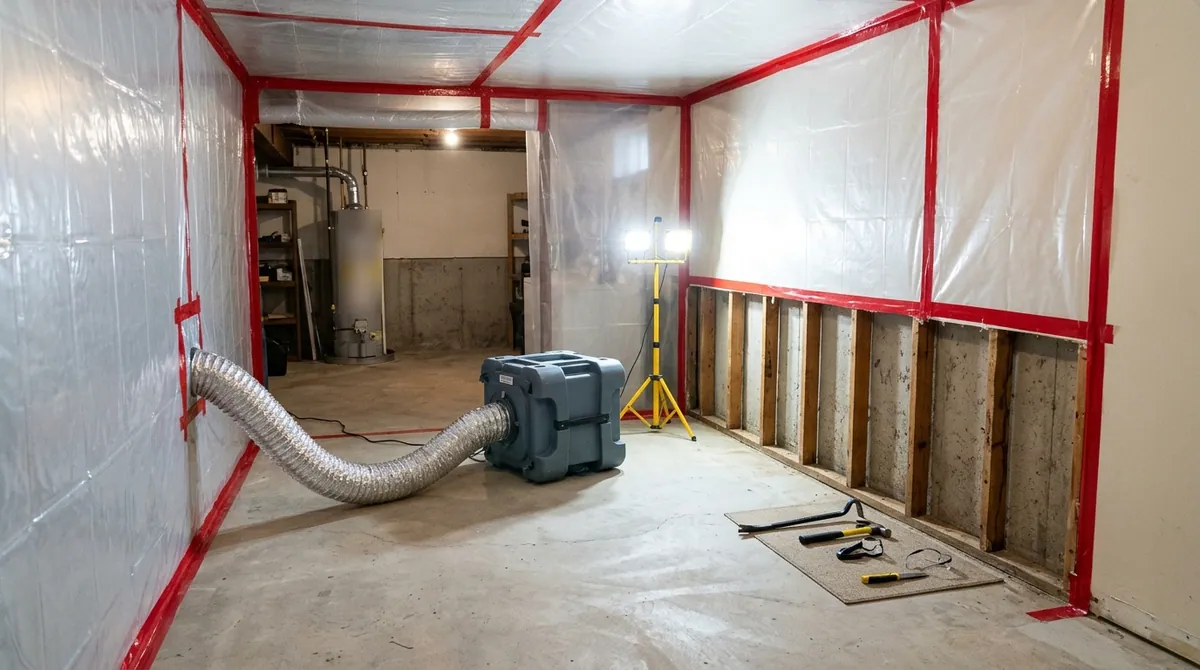
If you have found mold after a leak in your Cedar Rapids, Marion or Hiawatha home, it helps to know what the job involves before the crew arrives. Professional mold remediation follows a set order, based on the IICRC S520 standard, and every step has a reason.
Step 1: Find the Water Source
Mold needs moisture. Before anything is removed, the crew finds what is feeding it: a slow plumbing leak, a failed supply line, high basement humidity, attic condensation or a past leak that never dried. If the source is not fixed, the mold comes back. See mold after water damage.
Step 2: Assess and Map the Area
Moisture meters and thermal imaging show how far the dampness reaches behind drywall, under flooring and in framing. Visible growth is often only part of it. The assessment sets the size of the work area and what has to come out.
Step 3: Contain the Work Area
Plastic sheeting seals the area off from the rest of the house. An air scrubber with a HEPA filter runs inside and exhausts so the space stays under negative pressure. That keeps spores from drifting into clean rooms while materials are disturbed.
Step 4: Remove What Can't Be Cleaned
- Drywall, insulation and carpet padding with growth are cut out and bagged
- Damaged baseboards and trim are removed
- Debris leaves the containment sealed, not carried through the house open
Step 5: Clean the Structure
Framing, subfloor and other solid materials that stay are cleaned: HEPA vacuuming, wiping or sanding where needed to remove surface growth. The goal is removal, not just killing the mold, since dead spores can still bother sensitive people.
Step 6: Dry Everything
Dehumidifiers and air movers bring the remaining materials down to normal moisture levels, measured each day. See how drying equipment works.
Step 7: Check Before Rebuilding
Once materials are clean and dry, the area is checked before the containment comes down and new drywall goes up. Some homeowners also choose independent post-remediation testing.
Where Mold Shows Up in Cedar Rapids Homes
- Basements with humidity or past seepage (see basement humidity and mold)
- Attics with poor ventilation (see attic mold)
- Under sinks and behind dishwashers and washing machines
- Bathrooms with slow shower or toilet leaks
For what drives the size of a job, read what affects mold remediation cost, or see our mold remediation service.