
Mold After Water Damage in Hiawatha Homes: Timeline, Signs, and What Removal Involves
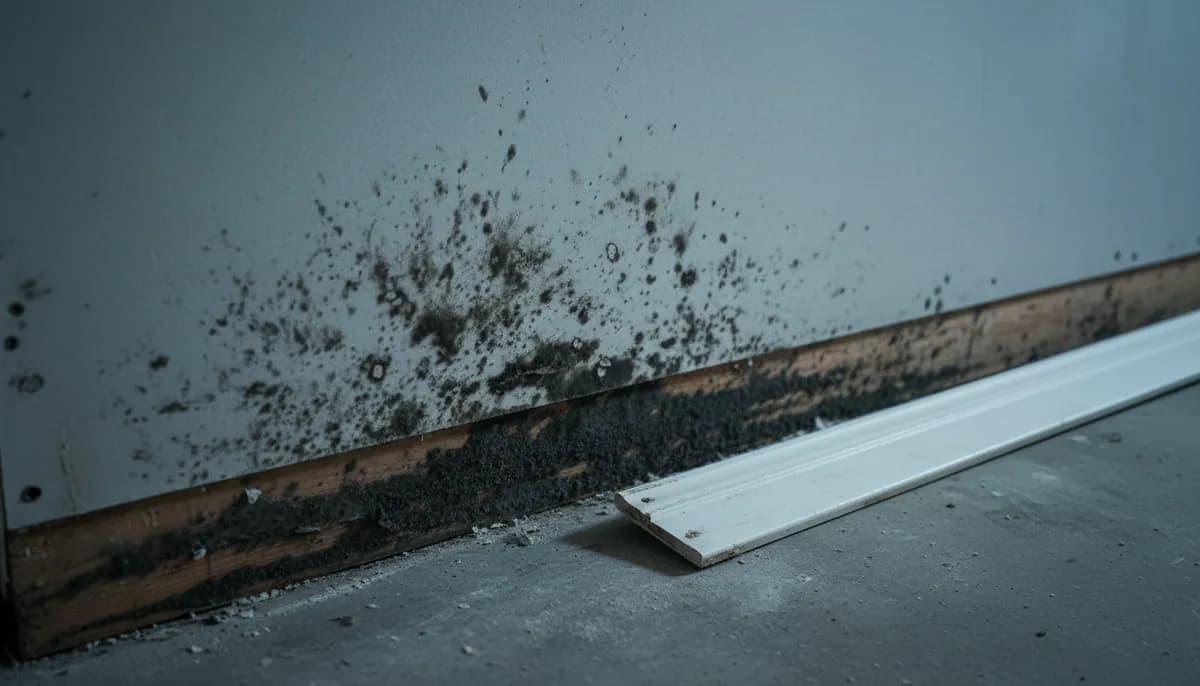
Hiawatha is a useful place to talk about mold, because the housing stock is unusually consistent. Most of the 52233 residential inventory went up between the late 1960s and the early 2000s as the town grew north of Cedar Rapids along Boyson and Robins Road. That means a lot of full basements, a lot of poured or block foundations of a similar era, and a lot of finished lower levels added ten to thirty years after the house was built.
Those three facts together are why a water loss in a Hiawatha home so often turns into a mold conversation, and why the timeline is shorter than homeowners expect.
The Actual Timeline
Mold does not need much. Spores are already present in every house in Iowa — they arrive on shoes, on pets, through open windows. What they are missing, in a normal home, is water. Supply that, and the clock starts.
- Hours 0-24. Nothing visible. Water is wicking upward through drywall and outward through carpet pad. Materials are absorbing, not growing yet.
- Hours 24-48. Germination begins on porous organic materials — paper drywall facing, wood framing, cardboard boxes on the floor. Still nothing you can see.
- Days 3-7. Visible growth on surfaces. This is when most homeowners notice, and by then the colony has been established for days behind the surface they are looking at.
- Weeks 2-3. Colonies mature and begin releasing spores into the air in volume. This is the point at which the problem stops being confined to the room where the water was.
The important thing about that list is where the intervention point sits. Everything is preventable inside the first window, and almost nothing is after the third. Proper structural drying started on day one is not a mold treatment — it is a mold prevention, and it is much cheaper than the alternative.
Why Hiawatha Basements In Particular
Three local factors stack up.
Below-grade humidity that never fully clears. Iowa summers run humid, and basements are the coolest surface in the house. Warm moist air meeting cool foundation walls condenses. In an unconditioned or lightly conditioned lower level, relative humidity sits in the 60-70% range for months — high enough to sustain growth even without a leak, and high enough to slow drying dramatically after one.
Finished basements built over original walls. A very common Hiawatha retrofit: studs furred out against the foundation, fiberglass batts, drywall to the floor. It makes a comfortable room and it creates a sealed cavity with no airflow, insulation that holds water like a sponge, and paper facing that mold eats. When water gets behind that assembly, nothing dries on its own and nobody sees anything until the smell arrives.
Aging supply lines and appliances. Houses in this age band are now running plumbing and water heaters well past their design life. The failures we see most in Hiawatha are water heater ruptures, washer supply hoses, and sump pump failures — all of which put water into exactly the finished lower level described above.
The Signs That Mean It Spread
Visible growth is the obvious one. These are the ones people miss:
- A musty smell that is stronger low down. Crouch at the bottom of the basement stairs. If the odour intensifies near the floor, you are smelling something in the wall base or under the flooring, not in the room air.
- Drywall that is discoloured only in the bottom few inches. That line is a water mark, and the growth is on the back of it.
- Baseboards or trim pulling away from the wall. Wood that absorbed water and swelled. Whatever wet that trim also wet the framing behind it.
- Symptoms that improve when you leave the house. Congestion, headaches, or eye irritation that clear on holiday and return within a day of getting home.
- Cold-feeling walls or persistent condensation on the lowest windows. Both indicate moisture in the assembly rather than just the air.
What Remediation Actually Involves
Remediation is not cleaning. Working to IICRC S520 protocols, the sequence looks like this:
- Find and stop the moisture. Nothing else matters if the source is live. Remediation without fixing the water is a repeat visit with extra steps.
- Containment. Plastic sheeting and negative air pressure so that disturbing the growth does not distribute spores through the rest of the house. This is the step DIY attempts skip, and it is the step that decides whether a basement problem stays a basement problem.
- Removal of affected porous materials. Drywall, insulation, carpet pad, and anything else that has absorbed both water and growth comes out and gets bagged inside containment. Cut lines run well past the visible edge, because visible growth understates actual growth.
- Cleaning of remaining structure. HEPA vacuuming and antimicrobial treatment of framing, concrete, and any salvageable semi-porous material.
- Drying to a measured target. Air movers and dehumidifiers until framing and concrete read at documented moisture content, not until it feels dry.
- Verification. Visual clearance at minimum; post-remediation air sampling where the situation or the claim calls for it.
The Honest Answer On Cost
A contained area of a few dozen square feet on one wall is a different job from a finished basement where the water sat a week. The variables that move the number most are how much porous material has to come out, whether containment has to protect an occupied house, and whether the source repair is part of the scope. We break the pricing down properly in what mold remediation costs in Cedar Rapids.
The Version That Costs Least
Every expensive mold job in a Hiawatha basement shares a sentence somewhere in its history: we thought it dried out on its own. Concrete and framing hold water long after the floor looks dry, finished walls hide the evidence completely, and by the time the smell reaches the top of the stairs the material behind the drywall has been wet for weeks.
If you have had water in a Hiawatha basement in the last few days, the useful move is drying it properly now rather than remediating it in three weeks. If the smell is already there, that decision has been made for you — and containment before disturbance is what keeps it from becoming a whole-house problem. Call and we will walk through what you are actually looking at.