
Slab Leaks: Water Damage Under the Floor in Cedar Rapids Homes
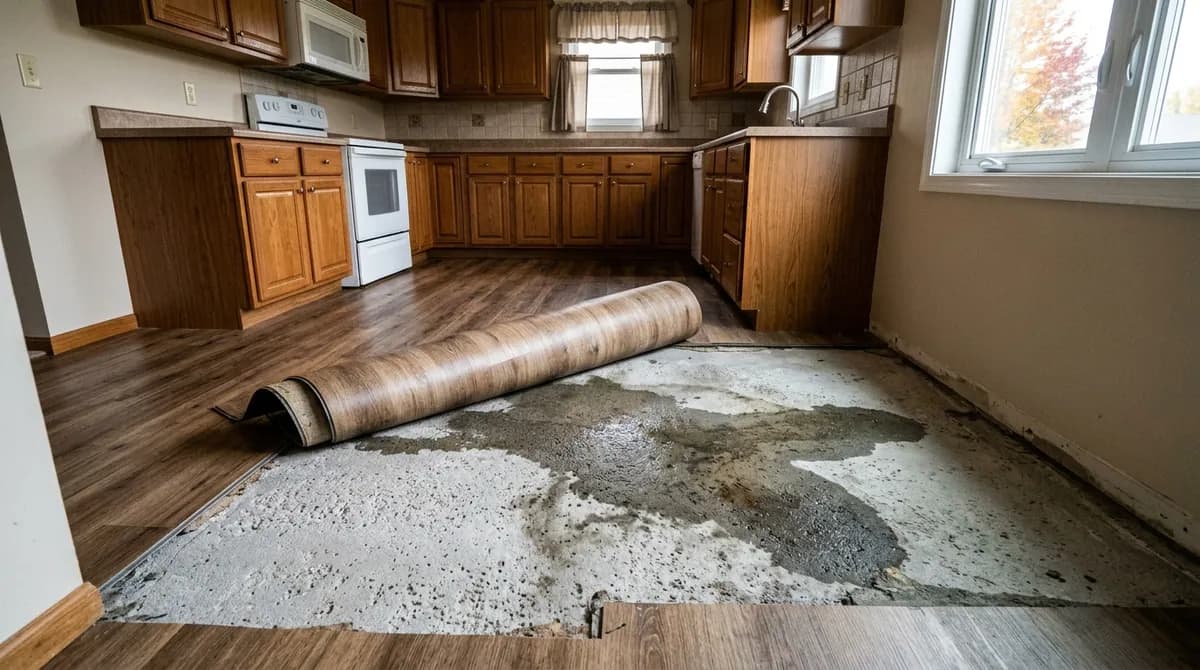
Most Cedar Rapids houses have basements, so slab leaks are less common here than in the South. They still happen: in slab-on-grade ranches, in family-room and sunroom additions poured on a slab, and in basements where a water line was buried in the floor. Because the pipe is hidden in concrete, the leak can run for weeks before the damage shows.
Signs of a Slab Leak
- A warm spot on the floor (a leaking hot water line warms the slab)
- Carpet or padding that feels damp with no spill nearby
- Wood or laminate flooring that cups, buckles or lifts
- Cracks in tile or grout that were not there before
- A musty smell near the floor in one area
- The sound of running water when nothing is on
- A water bill that rises month after month
A simple meter test helps: turn off every fixture, note the reading on the water meter, wait an hour without using water and look again. If the meter moved, water is going somewhere.
What to Do First
- Shut off the water at the main valve if you suspect a leak. See our shutoff valve guide.
- Photograph the floor, stains and the meter before anything is moved or cut.
- Call a plumber to locate and fix the line. Many use acoustic or pressure testing to find the leak without breaking up more concrete than needed.
- Get the moisture mapped. Fixing the pipe stops new water; it does not dry the flooring, walls and subfloor that are already wet.
Where the Water Goes
Water from a slab leak moves sideways under flooring and wicks up into the bottom of drywall and baseboards. Carpet padding holds it like a sponge. Laminate and engineered wood trap it underneath. On a basement floor, water can also travel along the slab to the nearest wall or floor drain.
Our guides on wet carpet and padding and wood floor cupping cover what can be saved.
How the Area Is Dried
A restoration crew uses moisture meters and thermal imaging to find the edge of the wet area, removes padding or flooring that cannot be dried, and sets dehumidifiers and air movers. Concrete dries slowly, so the slab and the materials on it are measured over several days until they reach normal readings. See how drying equipment works and our structural drying service.
Don't Wait on It
A slow leak under a floor gives mold time to start in padding, drywall and the bottom plates of walls. If you see the signs above, get the leak located and the moisture checked. Read hidden water damage signs for more clues.