
Water in Your Basement? Who to Call in Cedar Rapids — and in What Order
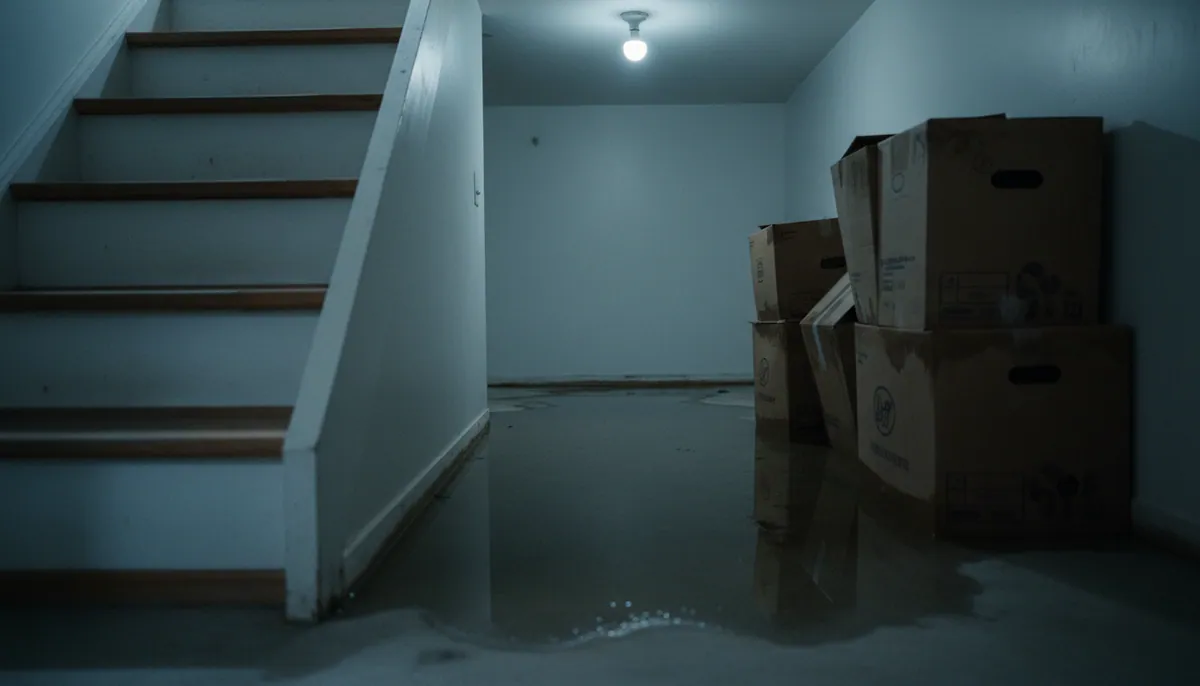
It is almost always the same scene. Someone goes downstairs for laundry, or to grab something from a storage shelf, and the last step sounds wrong. There is water across the floor, it is spreading toward boxes that have been down there for fifteen years, and the immediate question is not what caused this — it is who do I call.
That question has a real answer, and the order matters more than most people expect. Calling the wrong trade first usually costs a day, and a day is exactly the window in which wet drywall becomes a much bigger job. Here is the sequence we would give a neighbour, in the order we would give it.
Before Any Call: Two Things
Kill the power to the basement. If the panel is upstairs or in a dry spot, shut off the breakers feeding the lower level. If reaching the panel means standing in water, stop and call an electrician or Alliant Energy instead. No possession in that basement is worth the risk.
Shut off the water — if the source is a pipe. A main shutoff closed in twenty seconds is worth more than every call on this list combined. If you do not know where yours is, that is a genuinely common problem and worth fixing on a calm afternoon rather than at midnight.
Call 1 — A Plumber, But Only If Water Is Still Arriving
This is the call people most often get wrong in both directions. A plumber is the right first call when water is actively entering the house from the plumbing system: a burst or frozen supply line, a failed water heater, a broken fixture line, a drain that is backing up into a floor drain.
A plumber is not the right first call when the water came in through the walls or floor after heavy rain, when the sump pump quit, or when an appliance already finished making its mess. In those cases the source is either outside the plumbing system or already over, and a plumber will very politely tell you there is nothing for them to fix — a day later, with the drywall wicking the whole time.
The fast test: is the puddle still growing? If yes, and you have already closed the main without it stopping, something is entering from outside the potable system and a plumber may still help identify it. If no, skip to the next call.
Call 2 — A Water Damage Restoration Company
This is the call that actually addresses the water sitting on your floor. A plumber stops the leak; nobody in that trade is set up to extract several hundred gallons, pull baseboards, and dry a wall cavity to a measurable moisture content.
What a restoration crew does that a shop vac cannot: truck- mounted or portable extraction that removes water from carpet pad and beneath flooring, moisture meters and thermal imaging to map how far the water actually travelled inside the structure, and professional-grade air movers and dehumidifiers sized to pull water back out of concrete and framing rather than just off the surface.
That last part is why the timing matters. Surface water is the easy half. The water that has already been absorbed by the bottom sixteen inches of drywall, the sill plate, and the carpet pad is the half that decides whether this becomes a drying job or a demolition job. Call this one early — earlier than feels necessary.
Call 3 — Your Insurance Company
Report the claim once the bleeding has stopped and extraction is underway. Two things to have ready before you dial:
- Photos and video from before anything moved. Wide shots of each affected room, close-ups of the source, and the water line on the walls. Take these even if you are not sure you will file — you cannot go back for them.
- The cause, in one sentence. Standard Iowa homeowners policies treat sudden and accidental discharge from a pipe or appliance very differently from gradual seepage. What broke, and roughly when, is the first thing they will ask.
Worth knowing: most policies contain a duty to mitigate. You are generally expected to start limiting the damage before an adjuster gets there, not after. Waiting for permission to begin drying is a common and expensive mistake. Our Iowa claim guide walks through the documentation in more detail.
Call 4 — The City, In Three Specific Situations
Cedar Rapids Utilities (319-286-5900) is the right call when:
- You cannot locate or operate your own shutoff and need the curb stop closed from the street.
- The water appears to originate on the street side of your meter — that side is the city's responsibility, not yours.
- Neighbours are reporting the same thing at the same time, which usually points at a main rather than anything in your house.
A sewer backup coming up through a floor drain is also worth reporting, because the city needs to know if the blockage is in the public main rather than your lateral — and because that answer changes who pays.
What About the Other Trades?
An electrician if the panel or any outlet was submerged. Circuits that have been underwater need inspection before they are re-energised, full stop.
A foundation or drainage contractor if the water came through the walls rather than a pipe — but not today. That is a dry-weather conversation about grading, downspouts, and why the basement takes on water when it rains hard. It solves next time, not this time. The distinction between those two trades is worth understanding, and we cover it in waterproofing vs. restoration.
A mold assessor only if the water sat for several days before anyone found it, or if the smell is already there. Inside the first 24-48 hours, drying properly is what prevents the mold conversation entirely.
The Order, In One Block
- Power off to the wet level.
- Main water shutoff closed, if the source is a pipe.
- Photograph everything, before you move anything.
- Plumber — only if water is still arriving.
- Restoration company — extraction and drying.
- Insurance — report the claim with photos in hand.
- City — if the shutoff, the meter, or the block is involved.
Why the First 24 Hours Decide the Cost
Everything above compresses into a single principle: water damage is not one event, it is a process that keeps going until something stops it. Category 1 clean water becomes Category 2 within about 48 hours as it picks up contaminants from flooring, soil, and building materials. Drywall that is extracted and dried on day one usually stays; drywall that sits until day three usually gets cut out. Mold needs moisture, a food source, and roughly 24 to 48 hours — and a wet basement supplies all three.
None of that is an argument for panic. It is an argument for making the second call sooner than feels urgent. If you are reading this standing on a wet floor in Cedar Rapids, Marion, or Hiawatha, work down the list — and make the restoration call while the water is still on the floor rather than after it has finished moving into the walls. Our line is answered for emergency dispatch 24/7*, and the first 24 hours guide covers what to do between the call and the crew arriving.